
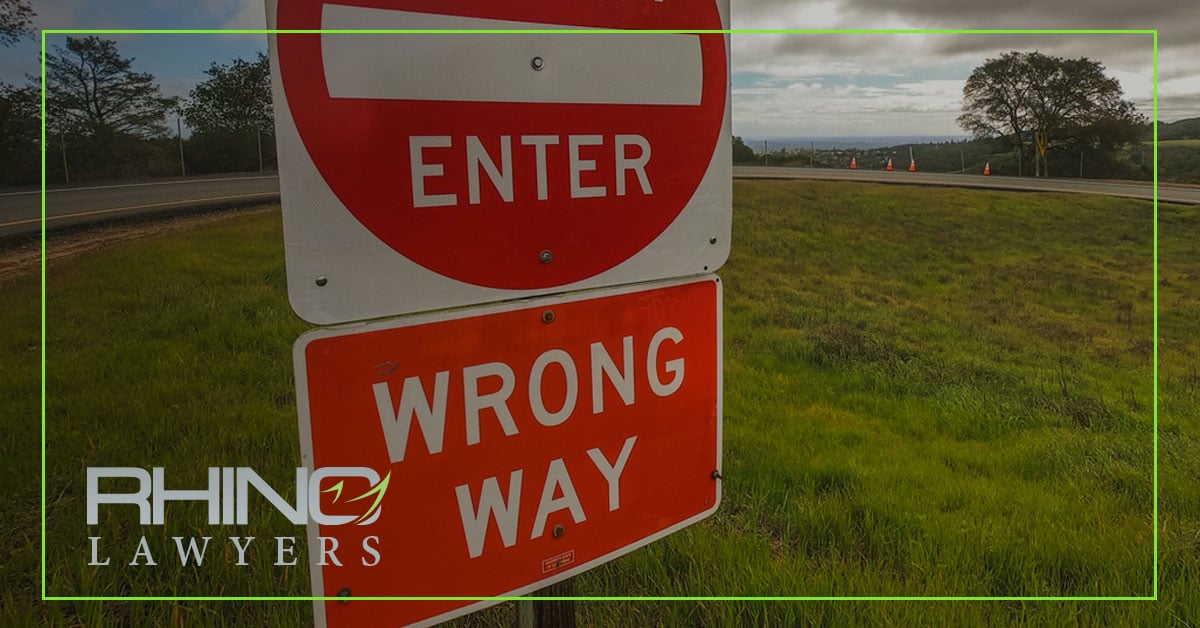
Wrong-Way Driver Kills Man on Suncoast Parkway
A man driving a GMC pickup the wrong way on the Suncoast Parkway (S.R. 598) in thick fog and crashed head-on into a vehicle going the correct way. According to a Highland County Sheriff’s office at the scene, the accident happened early Sunday morning, February 3 near mile marker 38. The wrong-way driver killed the driver of a Mini Cooper when he hit him head-on.
The Sheriff’s office said they suspect impairment to be a factor, and the wrong way driver had a previous DUI conviction in 2009. However, they have not filed charges, and it’s unknown if the driver of the GMC pickup was actually impaired.
Wrong-Way and Head-On Driving
Head-on collisions are the deadliest, according to a report by the National Highway Transportation Safety Administration. Head-on collisions account for only 2 percent of total accidents each year but make up 10 percent of all fatalities.
There are two types of head-on collisions: centerline drift and wrong-way driving (WWD). Centerline drift head-on collisions occur when the driver drifts or slides over the centerline of a non-divided highway and hits an oncoming car head-on. Eighty-five percent of head-on collisions are centerline drifts.
WWD collisions happened only in 15 percent of head-on collisions and occur when a vehicle enters a divided highway or freeway going the wrong way and hits a car going the correct direction.
Causes of Wrong-Way Driving
WWD collisions cause slightly more severe injuries and fatalities than other head-on collisions because of the high speeds of a non-divided highway. For these to occur, the driver must enter the lanes from the wrong direction, typically using in off-ramp for an entrance. Cause of these are:
- Impairment
- Poor visibility
- Poor/confusing signage
- Distraction including cellphone
- Relying on the navigation app
Head-On Collision Injuries
The reason head-on collisions are so deadly is that the impact comprises both vehicles’ speed and mass. Also, the occupants are thrown toward the front of their car, and then they are thrown violently back into their seats. This action causes certain common injuries:
- Blunt Force Trauma: The vast majority of fatalities come from the impact of the person into whatever is in front of them.
- Traumatic Brain Injury: Not always fatal and happens with the impact of the body at the time of collision.
- Thoracic Spine Injury: (Whiplash) This injury is not necessarily fatal, but it often results in paralysis. It comes from the body being thrown forward where the spine in the neck is stretched and then violently compressed when thrown back into the seat.
- Broken Bones: Skull fractures, facial bones, ribs and extremities such as wrists, ankles legs.
What Should I do if I’m Injured in a Head-on Collision?
If you are injured in a head-on collision, your number one priority is the get safe and then address immediate medical needs. After that, if you are able, make sure to get as much information as possible taking pictures if you have your phone or another camera with you.
Sooner or later, the focus will shift to who was at fault once the financial losses began mounting. At this point, it is best to talk to a professional who can advise you on the law and to evaluate your case. Don’t be fooled by the insurance agent as they have their own interests.
Do I Need an Attorney?
In some cases, maybe not. However, in a multiple car collision where the damages are significant, then talking to an attorney is a must. You need an attorney who can give you unbiased advice and can evaluate your case.
Contact a Tampa Auto Accident Lawyer Today
Talk to an Attorney at RHINO Lawyers today. Our personal injury team is ready to start working for you to get you the compensation you deserve.
Read More
Fatal Automobile Accident Wrongful Death Claims
Over 30,000 people die each year in auto accidents across the U.S. with 3,000 of those happening in Florida. When this happens, it’s devastating for the surviving members of the family. Whether the person is a spouse, parent, child or grandparent, if a family member is taken in an auto accident, the loss is traumatic.
If a loved one dies in an auto accident due to someone else’s negligence, a natural question is, who is able to make a claim if the injured person is dead?
If a loved one was killed in a head-on collision in Florida, contact our personal injury team today for a free consultation. RHINO Lawyers is the powerful, results-driven law firm, that takes Insurance Companies and Bullies “head-on!”
What is a Wrongful Death Claim?
Since a person who has passed can’t file a claim for his or her losses from an auto accident, the Florida law allows the estate of the deceased to file a claim. The estate is the rightful heir of a person’s wealth and property as determined by Florida’s inheritance laws. First in line is the surviving spouse, and then the children, if any.
The claim is based on the loss of the deceased to those in his or her family. Many times, those killed in a car wreck have a spouse and dependent children that counted on support. Also, there is a loss of the person as a spouse, parent or child, and this loss is acutely felt by those left behind.
Making the claim
Florida law spells out what a wrongful death is based on and under what conditions it can be made. Basically, the person or people who are inheriting the estate can recover damages based on the negligence of the at-fault person, and if that negligence resulted in the death of the person, then a wrongful death claim can be made.
Conduct that Leads to a Wrongful Death
There is a wide range of negligent actions that can lead to a wrongful death claim. For each of these, the at-fault person must be considered to have been negligent and the act caused the death of the victim:
- Driving while Impaired
- Speeding
- Wrong-Way Driving
- Rear-end collisions
- Head-on collisions
- Reckless driving
Types of Damages in a Wrongful Death Claim
Florida law states the types of damages that can be claimed. In a typical claim for damages, the inured person claims the losses he or she incurred because of the negligence of the at-fault person. However, in a wrongful death claim, damages can be based on the losses sustained by both the estate and the individuals affected by the loss. These damages are:
- Medical bills of the deceased, if any.
- Funeral expenses of the decedent.
- Pain and suffering of the deceased, if applicable.
- Loss of future income
- Spousal Loss of companionship, consortium.
- Parental loss of companionship (children’s relationship with deceased parents).
- Mental/Emotional pain and suffering of the children.
When can a Claim be Made?
After the victim dies, the estate and survivors have two years to file a claim with the court. Similar to other cases based on negligence, before filing with the court, a settlement can be made with the insurance company. But if the case is not settled within two years, then the claim needs to be filed with the court.
Many surviving members wonder if hiring an attorney is required in a wrongful death case. It doesn’t require one in most cases, but the wrongful death laws can be complicated. So the best course of action is to talk to an attorney who understands Florida’s wrongful death laws.
Contact a Tampa Car Accident Attorney Today
Even if you don’t hire an attorney, you need to speak to one that knows the law and can evaluate your case. Talk to an auto accident attorney at the RHINO Lawyers today. Our personal injury team is ready to start working for you to get you the compensation you deserve.
Read More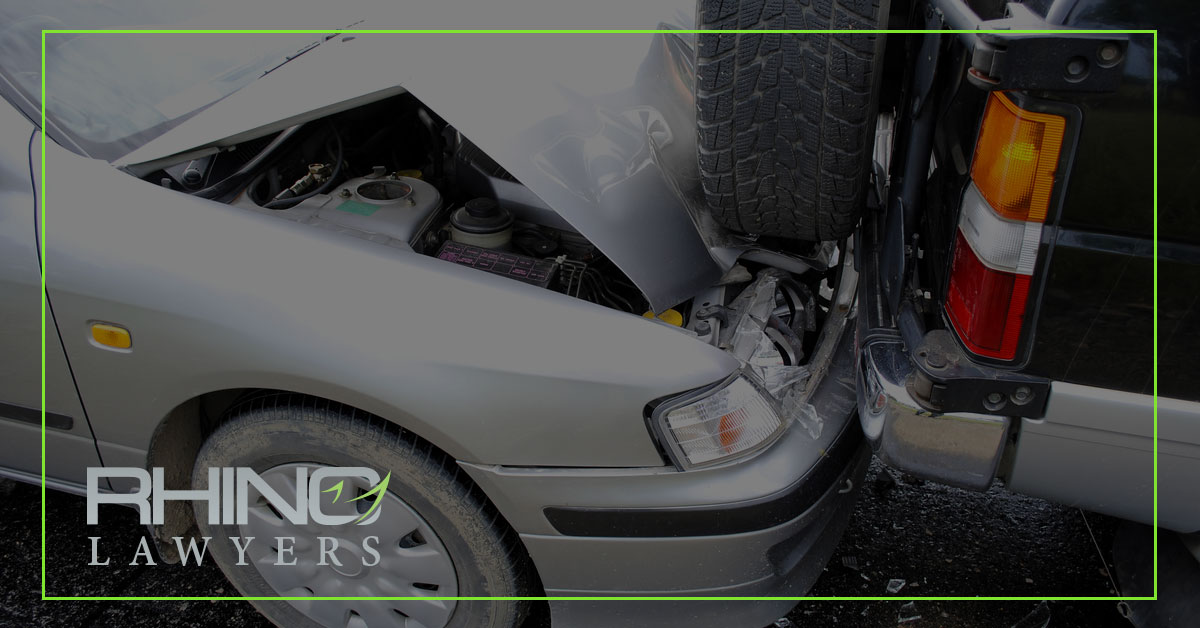
Rear-End Accidents in Tampa FL – Auto Injury Lawyers
Rear-end collisions are by far the most common type of vehicle accident making up over 30 percent of all accidents. According to the National Highway Traffic Safety Administration, there is an average of 2 million rear-end collisions a year resulting in over 500,000 injuries and 17,000 deaths.
In Florida, over 400,000 auto accidents happen each year with 120,000 of them being rear-ended collisions. In addition, the NHTSA found that rear-end collisions were more likely to occur in urban areas. Subsequently, this means you are at more risk of a rear-end collision in places like Tampa Bay, St Petersburg, Clearwater, Brandon, and Spring Hill. In fact, this is primarily due to the number of cars and the stop-and-go driving that is common in urban driving.
Thus, if you were seriously injured or a loved one was killed in a rear-end collision in the Tampa area, contact us today for a free consultation and case evaluation.
Causes of Rear-End Collisions
First, there are many reasons why rear-end crashes occur, and understanding these can help someone avoid rear-end crashes in the future. Some of these are:
- Sudden stop/Failure to stop: This is common on freeways and highways where the car in front suddenly stops and the following car doesn’t have time to avoid a collision.
- Lane change: Often times a driver will change lanes and not maintain the proper distance from the car in front.
- Distracted driving: Cell phone use is becoming the number one distractor in all automobile accidents. Others are eating, shaving, putting on make-up, changing radio/cd, interacting with other passengers.
- Impaired Driving: Alcohol has been the number one type of impaired driving responsible for many rear-end crashes. Today, marijuana impairment is trending upward as more states legalize recreational usage of the drug.
- Drowsy driving/fatigue: Driving too long without a rest or just getting behind the wheel without enough sleep cause a significant amount of rear-end collisions.
Common Rear-end Collision Injuries
At RHINO Lawyers, we see all types of injuries that come from automobile accidents. Those that are most common with rear-end collisions are:
- Whiplash: In medical terms, this is a hyper-extension and hyper-flexion injury and is the number one type of injury in rear-end collisions. It happens when the vehicle comes to a sudden stop. Afterward, the person slams forward and then slams back into their seat. These injuries can be painful and take a long time to heal. In some cases, people need surgery to repair cervical disc injuries that are common with whiplash.
- Traumatic Brain Injuries: Head impacts on the dash or the steering wheel can cause mild to severe concussions. Unfortunately, this causes injuries to the brain. When the head makes a sudden impact, the brain moves inside the skull, and in many cases, brain damage is a result. When this happens, there is typically a long road of cognitive rehabilitation ahead for the victim.
- Broken Bones: Anytime there is a sudden impact on a person, there is a chance for a fracture. In a rear-end collision, common fractures are to the hands due to bracing or holding onto the steering wheel; the feet from the legs and feet impacting the floorboard and firewall; collarbone/ribs from the seatbelt; and spine fractures that can lead to paralysis.
- Airbag injuries: Airbags undoubtedly save lives, but they can also cause severe burns and even death if the person is not the right heights or weight to be in a seat with an active airbag. Incidentally, some airbags malfunctions can send shrapnel through the car causing injury or death.
- Permanent disfigurement: Sometimes the victim of a rear-end collision will hit a steering wheel, dashboard, side window or side door frame and receive deep and severe lacerations requiring surgery. Personal property flying inside of the vehicle or broken glass may cut a person in the car.
Common Damages in a Rear-End Collision
Under Florida law, a person hurt by another’s negligence is entitled to be “made whole.” This is often impossible, but it can provide a basis for determining a financial award. Some of the damages allowed are:
- Medical Bills
- Lost wages, past, and future
- Permanent injuries/disabilities or disfigurement
- Pain and suffering
- Loss of quality of life/consortium
- Wrongful Death compensation
- Emotional distress
In short, money can’t make these things go away. But, it can help compensate for the many losses that come from an accident like a rear-end collision. Therefore, many victims of these accidents wonder if they need to get an attorney. In most cases, the answer is yes.
Contact a Tampa Area Car Accident Lawyer
Lastly, contact a Tampa Car Accident Lawyer that knows the law and can evaluate your case. So, talk to an Attorney at RHINO Lawyers today. Our personal injury team is ready to start working for you to get you the compensation you deserve.
Read More
Tampa Man Killed in Five-Car Pile-up on 301
A five-car pile-up happened after a GMC Envoy hit a Toyota Sienna who stopped in traffic. The GMC pushed the Toyota into a Chevy pickup. Once these vehicles came to a rest, a Lincoln SUV stuck the Envoy. As a result, the Envoy ran into the Sienna again who hit the Chevy pickup for the second time.
According to a Florida State Trooper at the scene, the driver of the Envoy died at the scene. Paramedics took two other drivers to a nearby hospital with undisclosed injuries. Law enforcement arrested the driver of the Lincoln SUV for driving without a license.
Multiple-Vehicle Crashes
Multiple-car crashes can be dangerous as there are several impacts. In fact, some vehicles get hit more than once. This can cause serious injuries as many victims endure multiple hits. There are typically two types of multi-vehicle accidents: chain reaction and pile-up. Each of these have their own characteristics and create unique problems for all involved.
Chain Reaction Crashes
A chain-reaction crash happens when a collision occurs involving two cars and then other impacts occur in a series of events all linked to the first collision. These can be especially deadly. This is because the vehicles involved are traveling at higher speeds and have significant momentum. These types of crashes are known for high property damage, rollovers, centerline/median crossing and cars leaving the roadway.
Five-Car Pile-Up Crashes
A five-car pile-up or multi-car wreck, although technically a chain reaction as well, happens when cars fail to slow or stop when approaching another accident or stopped vehicles. These collisions can be small fender-benders to high-impact collisions. Click the chain-reaction crash video to watch the shocking pile-up unfold on an icy freeway.
Problems with Multi-Car Crashes
A significant factor in a multi-car crash is the risk of being struck a second or third time as cars come up on the scene. Many times a chain reaction turns into a pile-up collision as other motorists are unable to stop.
According to experts, the best thing to do in a chain-reaction or pile-up collision is to stay in your vehicle with the seat belt on. This is because the car around you—even damaged—offers more protection than getting out and being in the open. Of course, there are many times when it’s better to exit the vehicle such as when the vehicle is on fire or leaking fuel.
How is Fault Determined?
After clearing the scene and everyone has been treated and healing, the fault of the accident will become important. Because those injured will be facing severe financial losses. Some of these losses that affect the victim soon after the accident are:
- Medical bills
- Rehabilitation
- Lost time from work
- Loss of a job
- Transportation: short term and replacement
- Disability: temporary or permanent
The issue of fault in a two-car collision can be tricky at times. However, in a five-car pile-up crash, the series of events and the difficulty the crash scene investigators have when trying to determine what happened compounds the trickiness. With so many cars and possible impacts, it can be a challenge to determine the facts.
It’s likely that in multi-car crashes, more than one person will be at fault. The investigators will look at each impact and try to determine which car struck the other under what circumstances. Because a second or even third impact could involve the same car with a different driver at fault for each impact. This can make determining which driver is responsible for which injuries extremely complicated.
Do I Need an Attorney?
Talking to an attorney is a must after any crash involving a serious injury or the loss of a family member. You need an attorney who can give you unbiased advice and can evaluate your case.
Even if you don’t hire an attorney, talk to an Attorney at RHINO Lawyers today. Our personal injury team is ready to answer any questions you may have.
Read More
Statute of Limitation of Personal Injuries in Car Accidents
A statute of limitations is a law that limits the time a person has to file a complaint for a lawsuit. In Tampa and the rest of Florida, if the lawsuit involves a claim for a personal injury, then the plaintiff (the one filing the claim) has four years from the date of the accident to file.
This means anyone involved in an accident on January 1, 2016, will usually have until January 1, 2020, to file. You can file on that day, but if you wait until January 2, 2020, then a judge can throw out the suit. Due to not filing on time. Very few exceptions exist.
Be sure to speak to an attorney to have them go over your options as soon as possible when injured. If your injury happened in the Tampa, Florida area, contact us today for a free consultation.
Purpose of a Statute of Limitations
In each state, that state’s legislature passes a law determining the statute of limitations for different types of legal claims. The reason for the limit is that as more time goes by, the more difficult it is to find witnesses and evidence that could assist the jury in determining what happened. The limit is on the plaintiff because he or she controls filing the case. Whereas the defendant has no ability to hurry up the claim.
Exceptions to Filing by the Deadline
There are situations that stop or “toll” the time running on the statute of limitations. If any of these apply, then the clock stops running and then continues if the situation changes back. Some of these circumstances are:
- Incapacitation: If incapacitated from injuries, such as a coma, then the time for filing stops until the person is out of the coma or dies.
- Out of the state: If the person who committed the act leaves the state after the case has been filed, then it stops until he or she returns.
- Concealment: If the defendant attempts to hide from the person who wants to file a claim, then the time stops.
- False Name: If the defendant uses a false name to attempt to prevent the plaintiff from locating the defendant.
How it Works
On the day of the accident or personal injury, the plaintiff has four years to file a claim. If you file the claim even one day after the four years are up, then the court can dismiss the case. And no claim can be made for damages from the defendant.
However, if one of the exceptions happens—like the defendant leaves the state for two years—then the statute of limitations time could stop accruing, and may not pick back up until the person returns to the state.
Contact a Tampa Auto Injury Lawyer
If you have been injured in an auto accident or by some other person’s negligence, you need to see an attorney right away to discuss when the deadline is for your case.
Don’t wait until the last minute as then something might happen and the deadline might pass. Call the Tampa Auto Injury Lawyers at 844 RHINO-77 or 844 879 3213 to talk to our personal injury team who can advise you on Florida’s personal injury laws.
Read More
No Fault Insurance in Tampa Florida
Florida has a “No Fault” personal insurance system meaning that the law requires each driver to have a $10,000 personal injury protection policy (PIP). This means that when someone in Florida is involved in a car accident, all medical bills and lost wages up to $10,000 must be paid from the injured person’s own PIP which pays 80 percent for medical bills and 60 percent of lost wages.
It works like this: You get into an auto accident that is your fault. Then your PIP pays medical bills (80%) and any lost wages (60%) up to $10,000.
Let’s say it’s the other driver’s fault. Then not much has changed as you still have to use your own PIP insurance to pay for your medical bills and lost wages up to $10,000. However, what about those bills and/or lost wages beyond $10,000?
Exceptions to PIP Insurance
Florida law allows for exceptions to having to use your own PIP. This means that if one of these exceptions applies, then you can sue the other driver. These exceptions are:
- Medical bills/lost wages greater than $10,000.
- Significant and permanent loss of an important bodily function.
- Permanent injury within a reasonable degree of medical probability, other than scarring or disfigurement.
- Significant and permanent scarring or disfigurement.
This means that if you have any amount of medical bills for a “significant and permanent loss of bodily function” then you can sue for those damages regardless of the amount of the medical bills. When you do sue, you can get “special damages” for pain and suffering, mental anguish, and inconvenience because of bodily injury, sickness, or disease. You have to prove that the defendant was negligent and that these injuries arose from the accident.
How it Works:
Let’s say you are in an automobile accident that is not your fault and you have $5,000 in medical bills and $5,000 in lost wages. Then even though it’s someone else’s fault, you have to use your PIP insurance to pay for your medical bills and lost wages. So for $5,000 in medical bills, your PIP will pay $4,000 leaving you to pay $1,000. For your lost wages from being out of work, your PIP will pay you $3,000.
Let’s say that out of those $5,000 in medical bills, $4,000 was for a significant and permanent injury. Then you can sue the other driver for those $4,000 plus any special damages such as pain and suffering.
Now let’s say that your medical bills were $20,000. But they weren’t considered significant and permanent, and you weren’t out of work. In this case, you must use your own PIP for the first $10,000 (you would still owe $2,000 after PIP paid $8,000). After, you can sue the other driver for the remaining $10,000 plus pain and suffering and all other special damages. One thing to keep in mind when you sue for anything not covered by your PIP insurance, Florida is also considered a Comparative Fault state. Meaning that if you were somewhat at fault, the amount paid from the other driver gets reduced by that percentage.
Always Call a Tampa Auto Accident Lawyer
If you are seriously injured in an auto accident, speak to a Tampa Auto Accident Lawyer. Call the RHINO Lawyers at 844 RHINO-77 or 844-879-3213 to talk to our personal injury team who can advise you on Florida’s personal injury laws.
Read More
Comparative Fault in Tampa Florida
When someone is in an auto accident, many times one person is completely at fault. In these cases, the fight is over how much money the injured person will receive. They base the compensation on the amount of their losses. Prior to comparative fault laws, the law required that the at-fault person pay 100 percent of the damages. However, if the injured person was partially to blame, (called contributorily negligent) then that person would get zero compensation.
Many felt this wasn’t fair. Since it’s not usually so black and white as to how much each person was at fault. Plus if a plaintiff (the person bringing the lawsuit) was even 1 percent at fault, they would get nothing. So what would be fair?
In the 1960s, the idea of dividing fault between the parties emerged. Today all but four states in the U.S., assign a percentage of fault in the accident to each party. As a result, each person pays their own percentage of fault for the plaintiff’s injuries. They call this comparative negligence or comparative fault.
Injured? Before reading further please note that you may contact us for a free consultation where we will provide legal advice. Below is simply legal information and one should not take it as advice. Also, many case settlements happen outside of court.
Types of Comparative Fault
There are two primary approaches to comparative fault. One is a pure comparative fault, and the other is a modified comparative fault. Tampa and the entire State of Florida uses a pure comparative fault system.
Pure Comparative Fault
In this system, the court will assign fault to each responsible person (ie: the drivers in an auto accident). Then each person is responsible for the plaintiff’s damages up to their percentage of fault. For example, if the court finds the plaintiff to be 20 percent at fault and the defendant 80 percent at fault, then each would pay that percentage of the plaintiff’s damages. If the damages were $100,000, then the plaintiff would get 80 percent of the damages or $80,000.
Modified Comparative Fault
In these states, they assign fault to each party. However, if a plaintiff brings a lawsuit against a defendant, and the jury finds that the plaintiff is more than 50 percent at fault, then he or she may not recover anything. It works like this: Let’s say there is $100k in damages, and one driver believes the other is more at fault than the other. If this driver sues, then he or she is the plaintiff and the other is the defendant.
If the jury finds that the plaintiff was 55 percent at fault, then the plaintiff would lose the lawsuit and collect nothing.
It Gets Complicated
In most accidents, both drivers sustain damage, and in many of these, both have medical injuries. So what if driver A is somewhat at fault but driver B is mostly at fault and A sues B for damages? Then the court will assign blame and the plaintiff will recover his or her assigned percentage. For example, if the plaintiff has $100,000 property and medical damages, and the defendant is 60 percent at fault, then the plaintiff would get $60,000. Sounds simple right? But what about the defendant’s damages? What if the defendant sustained $20,000 damages in car repairs and medical injuries? Does the defendant get any “credit” for those damages?
Unless the defendant countersues, then the answer is no. In a lawsuit, the court can only look at the claims for damages made by the plaintiff, and if the defendant wants the court to consider his or her property damages and medical bills, then the defendant will have to countersue. If that happens, it gets complicated.
In simple form, the court will look at each case—the claim and the counterclaim—and then award each person an amount to pay the other. Thus if the court awards the plaintiff in the original lawsuit $60,000 (60% of $100,000) and then in the defendant’s counterclaim, it awards the defendant $8,000 (40% of $20,000) then the defendant would get an $8,000 credit because the plaintiff was 40 percent responsible for the defendant’s injuries.
It must also be considered that Florida is a “no fault” insurance state meaning that each person must have a $10,000 policy for medical bills and lost wages. This means they pay all medical bills and lost wages up to $10,000 from the injured person’s own policy regardless of who is at fault. There are exceptions so you should learn what those are before you settle with any insurance company.
Contact a Tampa Auto Injury Lawyer
This might sound a bit complicated, so the best thing to do if you are injured is to get an attorney to help you. Even if you don’t hire the attorney, it would be wise to at least consult with one to let you know what you’re up against. It may turn out to be a simple, straight forward case, but be aware that any personal injury case in Florida can be complicated. Call the Tampa Auto Accident Attorneys at 844 RHINO-77 or 844 879 3213 to talk to our personal injury team who can advise you on Florida’s personal injury laws.
Read More
Six-Car Pileup in St. Petersburg Ends Tragically
A pileup crash that involved six cars killed a woman. The crash happened on Sunday afternoon, January 27, 2019, on 49th Street. According to the Tampa Bay Times, the woman was a passenger in a taxicab that rear-ended a Chevy Tahoe that was pushed into a Ford Escape. The Escape hit Kia Optima which then hit a Hyundai Santa Fe. The paramedics took the Taxi driver and passenger to a local hospital in serious condition. Tragically, the passenger died later at the hospital.
Pile-up Crashes
Multi-car crashes happen in two ways, chain-reaction, and pileup collisions. A chain-reaction crash happens on a freeway where a collision between two cars causes other cars to collide. In a pileup crash, cars arriving on stopped cars are unable to slow down in time and plow into the cars in front of them. Sometimes the stopped cars are there because they were in a previous accident.
Every collision is dangerous. But in a pileup, secondary crashes can subject some vehicles to multiples hits. In many cases, a person survives the first crash with little injury. Yet, then is seriously injured or killed in the subsequent crashes.
According to the American Automobile Association, the best thing to do when you are involved in a crash where there is a possibility of a secondary collision is to stay in your vehicle with the seatbelt on. This is because once you get out, you are no longer protected by your vehicle. However, if there is another reason to leave the vehicle like you smell leaking gas or see smoke or flames, then you are better off getting out of the vehicle and to a safe location.
How is Fault Determined in a Pileup Crash?
Immediately following an accident, fault doesn’t seem to be very important. Especially, when compared to the need for safety and treatment. Yet, after many of the injured suffer with medical bills and other financial losses that can become substantial.
Then the issue of fault will become important. In serious crashes, traffic investigators will process the scene to determine what happened and then will issue a report giving their opinion as to what happened, and typically these reports do not give a conclusion as to who was at fault.
In pileup crashes, complicate finding fault. As in many cases, a car might be a victim for one impact and at-fault for another. This leaves the parties, their insurance companies and possibly the courts to figure out who bears financial responsibility.
Another problem motorists involved in a pileup crash face is that the insurance company will often try to point the finger of blame toward everyone but their client and will attempt to use the accident report to validate their position.
Do I Need an Attorney?
The answer is yes! After any serious injury or death of a loved one, you need to talk to someone who has your best interest in mind and can give you realistic and unbiased advice. You need an attorney that understands multi-car and chain-reaction crashes and has experience dealing with insurance companies. Don’t wait until they start treating you poorly before you contact an attorney.
Contact the RHINO Lawyers which is a powerful, results-driven law firm, that takes Insurance Companies and Bullies “head-on!” Anyone injured due to the negligence of a driver in Florida call us for a free consultation. Our personal injury team will offer you advice to help you get the compensation you deserve.
Read More
How To Get a Car Accident Report in Tampa Florida
Involved in an accident involving a serious injury or a loved one passed away during the collision? Obtain your car accident report. Then be sure to contact our personal injury team for a free consultation. RHINO Lawyers is dedicated to tackling the insurance companies head-on.
How To Get a Car Accident Report in Tampa Florida
In the City of Tampa, police will file an accident report shortly after the crash. (If you did not call the police. File an accident report within 10 days of the crash. In the future, always call 911 after a crash.)
If you have retained an attorney, they will likely obtain the accident report on your behalf. Also, your insurer or you may obtain an accident report for a crash that you were involved in. The law only allows these parties to obtain the accident report for the first 60 days from the time of filing.
If you are obtaining the report yourself, you will need a photo ID and you will also need the Sworn Statement for Traffic Crash Report Information form which you can download here Sworn Statement PDF.
Tampa accident reports may be purchased online on the Traffic Accident Report Request page or picked up in person at the Tampa Police Department, 411 N Franklin St, Tampa, FL 33602 during normal business hours.
When will the crash report be available?
Short-form crash reports are usually available within a week of the crash.
Long-form Florida Traffic Crash Reports are usually available around 10 days or so after the crash. They use these reports when there are DUIs, significant property damage, injuries, or deaths. Long-form reports are also filled out when a tractor-trailer or other commercial vehicle totaled a car.
Let Us Help Retrieve Your Auto Accident Report
Dealing with an auto accident is stressful. Allow us to aid you in locating your report swiftly. Simply provide us with basic details about your auto accident, and our team will work to find your report for you.
What To Expect:
By submitting your request, you consent to RHINO Lawyers’ auto accident team contacting you to offer assistance. In addition, expect potential follow-up communication via telephone, email, or SMS from our auto accident team to help in your recovery process. It’s important to note that utilizing this service does not establish an attorney-client relationship. Additionally, you agree to adhere to our Terms of Use.
What to Do With Your Accident Report:
Thoroughly review your police accident report. This document holds crucial details, such as insurance providers, driver identities, and the law enforcement officer’s assessment regarding fault attribution for the accident.
To get started click here, complete the form, and we will do the rest.
Do I need an attorney?
You may not need an attorney for accidents resulting in only property damage or minor scrapes and bruises. However, it is always important to speak to an attorney after any crash resulting in serious injuries or fatal accidents. Tampa injury lawyers provide free consultations and offer you advice that is in your best interest.
Read More
Man Loses Both Legs in Serious Motorcycle Hit-and-Run
A Mitsubishi Galant and a motorcycle collided severely injuring the motorcycle rider. The driver of the Gallant fled but was caught by police as he returned to the scene later. The motorcycle hit-and-run happened on westbound Park Boulevard at 40th Street N. around 10:30 pm, Wednesday, January 16.
According to Tampa Bay Police at the scene, the driver of the Gallant tried to turn from the far right-hand lane, across six lanes of traffic into a restaurant parking lot when it drove into the path of the motorcycle which was traveling westbound on Park Street.
As a result, the accident left the motorcyclist with severe injuries to his legs, and he ended up losing both of them. The driver of the Gallant was arrested for leaving the scene of an accident involving serious injury and driving on a suspended or revoked driving license.
Motorcycle Crashes
Any accident on a motorcycle can result in serious injury or death because of the vulnerability of the cyclist. According to the U.S. National Highway Traffic Safety Administration (NHTSA), a person is 6 times more likely to be killed in a motorcycle accident than in a car crash. For passenger vehicles, there are 13.10 deaths out of 100,000 crashes, and the rate for motorcycles is 72.34 per 100,000 crashes.
The risk of serious injury is also much higher for motorcyclists who are at higher risk for certain types of injuries. These are:
- Traumatic Brain Injury
- Deep Abrasions (Road Rash)
- Broken Bones
- Loss of Limbs
Causes for Motorcycle Crashes
One of the advantages of a motorcycle is also its greatest liability when it comes to accidents. Motorcycles are smaller giving them quickness and greater maneuverability. However, they also have a low visual profile that can contribute to crashes. Some of the leading causes are:
- Blind-spot riding
- Car drivers turning left into oncoming motorcycle
- Car drivers pulling out into path of motorcycle
Some motorcycle accidents are caused by risky driving on the part of the motorcyclist. Some of these are:
- Dooring (Open door on motorcycle traveling between cars)
- Lane splitting
- Speeding
- Aggressive Driving/Weaving
- Shoulder driving
- Impaired driving
Do I need an Attorney if I’m Injured in a Motorcycle Accident?
Many times when a driver’s seemingly obvious mistake causes an accident with a motorcycle, the rider feels that he doesn’t need an attorney. While this can be theoretically true, in actual practice it isn’t. If you don’t have a professional on your side, you are relying on the fairness of the insurance company and their lawyers.
Don’t make this mistake. Speak to an attorney that knows the law and can evaluate your case. Lastly, contact an attorney at RHINO Lawyers today. Our personal injury team is ready to start working for you to get you the compensation you deserve.
Read More