
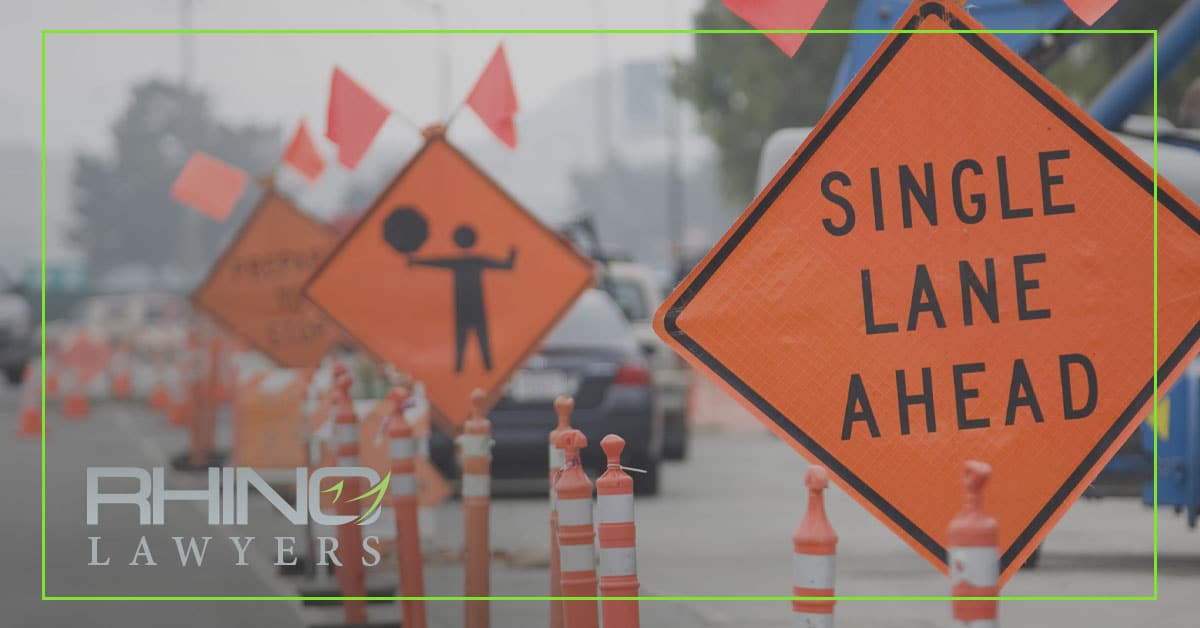
DRIVING IN CONSTRUCTION ZONES
To start with, road repair/construction is a necessity to keep our roadways and highways in working order. Because roads in disrepair are dangerous for motorists to travel on. But, driving in construction zones also poses a danger to motorists and construction workers alike. So, the state takes driving violations in a construction zone seriously. And, this is what you need to know.
Unsafe Driving Habits in Construction Zones
Unfortunately, navigating through a construction zone can add to a driver’s frustration with an already busy roadway. Especially, when you add construction barriers, new traffic flows, and large construction vehicles. So, we listed some unsafe driving habits you should avoid while in a construction zone.
- Speed Limit – Not following the reduced speed limit posted in the construction zone.
- Lane Changes – Merging at the last minute or waiting until the lane ends.
- Driving Distracted – Using a cell phone without a hands-free device, texting, or any action that takes your attention off the road.
- Following Safe Distance – Tailgating or following another vehicle too closely.
- Passing – Drivers not reducing their speed while passing work vehicles stopped on the side of the road.
Construction Zone Speeding Violation Penalties
Next, a person caught speeding in a construction zone is subject to the maximum fine. Yet, if workers are present, then they are looking at double the amount stated in Florida Statute 318.18. Not to mention, the possibility of a mandatory court appearance. As well as, points on their license and increased insurance premiums. So, it’s best to follow the posted speed limit. But, if you receive a ticket we recommend contact us right away so we can help keep your driving record clean.
CONTACT TAMPA TRAFFIC TICKET ATTORNEY
RHINO Lawyers can help and guide you through a system molded by law enforcement, judges, and lawyers for decades. Having won cases for our clients in similar circumstances, our criminal defense team knows what it takes to fight on your behalf.
Let RHINO Lawyers answer your questions and review the facts of your case with a Free Consultation. Get started by completing the “Free Instant Case Evaluation” or by calling us any time, day or night, at 844.329.3491.
Leer más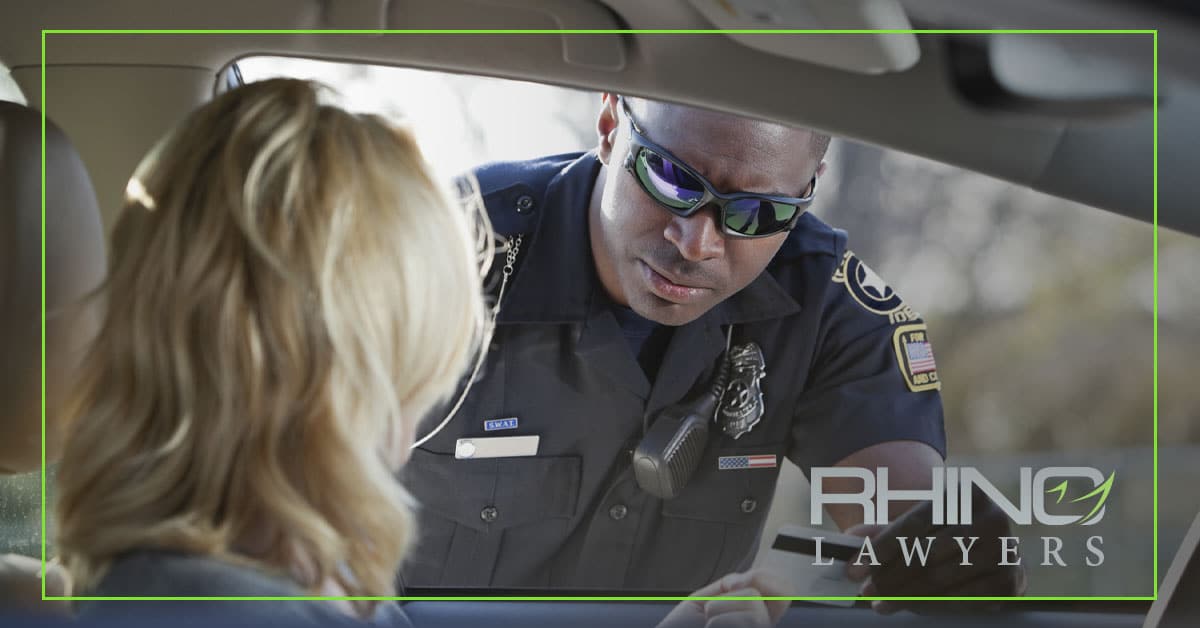
SEARCHING VEHICLES DURING A TRAFFIC STOP
To begin with, law enforcement officers pull over traffic offenders every day. In fact, the officer will likely ask for documents like driver’s license and proof of insurance. As well as, they might ask to search your vehicle during the traffic stop.
Even though you have the right to refuse a vehicle search, an officer has a couple of situations they can search without permission. So, it is important to know your rights for searching your vehicle during a traffic stop.
The 4th Amendment And Traffic Stops
First, the Fourth Amendment protects you from unlawful searches. In fact, this amendment applies to your home, business, and your car. Incidentally, traffic stops are the most common place you will interact with law enforcement. So, it is important to know when they can and can’t search your car.
Typically, law enforcement officers need a search warrant to conduct a search. But, there are exceptions in place that allow them to conduct a search without a search warrant.
Consent To Search
With regard to traffic stops, police officers do not necessarily have the right to search your car. Yet, they may ask you if they can search your vehicle. But, if you say yes, you waive your Fourth Amendment rights. And, if you do not consent and clearly tell the officer no, the law requires them to comply.
Search With Probable Cause
On the other hand, a law enforcement officer may search your vehicle during a traffic stop if they have probable cause. For instance, if the officer sees a weapon, drug paraphernalia, or even the smell of drugs they can search your car.
In any event, the officer needs a viable reason to search your car. Unfortunately, some law enforcement exploit this exception to conduct search. Although, without clear probable cause the search is illegal.
Search During An Arrest
Additionally, police officers can search your car during arrestable traffic offenses. Specifically, they will conduct the search to secure evidence. As well as, for their own safety. But, even with an arrest, they have limitations on searches. For one thing, they cannot search your car for evidence if you get arrested for DWLS (Driving While License Suspended).
How to handle a traffic stop with a vehicle search
Finally, law enforcement generally treats every citizen justly during traffic stops. Unfortunately, that doesn’t always happen. So, we put together a few things you can do to keep the situation from escalating during a traffic stop.
- Remain calm
- Don’t argue or resist
- Keep your hands visible
- Only reach for something when the officer requests
- Comply with lawful requests
Remember, you and your passengers have the right to remain silent. And, if they search or stop you illegally you have the right to dispute it in court. In all honesty, when this happens you need a Tampa criminal defense attorney. So, contact the RHINO Lawyers equipo.
CONTACT TAMPA TRAFFIC TICKET ATTORNEY
RHINO Lawyers can help and guide you through a system molded by law enforcement, judges, and lawyers for decades. Having won cases for our clients in similar circumstances, our criminal defense team knows what it takes to fight on your behalf.
Let RHINO Lawyers answer your questions and review the facts of your case with a Free Consultation. Get started by completing the “Free Instant Case Evaluation” or by calling us any time, day or night, at 844.329.3491.
Leer más
IMPROPER PASSING IN FLORIDA
To begin with, improper passing charges fall under Florida Statutes 316.083 and 316.085. In fact, impatient driving is the leading cause of most improper passing tickets. Because most impatient drivers do not follow the proper protocol when changing lanes.
In all honesty, if you drive you will pass another driver. But, when can you pass that car legally? Typically, you can pass on the left if you do not endanger other drivers. Unfortunately, passing on the right is not the same.
Three Types of Improper Passing
Considering, passing on the right is the most common improper passing citation. Actually, there are three ways a driver can receive a ticket for improper passing. Notably, these include the following:
- Passing on the Right – This usually occurs on a four-lane road when a vehicle is traveling too slowly in the left lane. Both vehicles are in violation of the law under these circumstances.
- Blind Passing – This occurs on curves or hills when passing in the oncoming traffic lane. And, the passing driver can’t see on-coming traffic at a safe distance.
- Dangerous Passing – This offense involves cutting another vehicle off after making a pass. At one time or another, we’ve all gotten cut off by another driver.
Avoid an Improper Passing Ticket
Despite, passing on the right being illegal Florida has exceptions to the rule. Furthermore, the law accepts these exceptions as safe driving tactics. Thus, the exceptions for passing on the right include.
- Car Making a left turn – So, if the car in front of you makes a left turn you can pass on the right. But, you must use a legal lane on the right, and you cannot cut off on-coming traffic.
- Passing Slower Traffic on Right – Additionally, you can pass on the right while driving a busy road or highway with two or more lanes of traffic. In the same way, passing a car making a left you can use the right lane of the highway. As long as, the left lane has traffic, you don’t obstruct on-coming traffic, and you do not cause an accident.
- One-Way Street Passing on Right – Also, it is legal to pass on a one-way road that has more than one lane. Still, you can only pass when it is safe to pass without speeding or causing an accident.
Proper Ways To Pass
Granted, passing other cars is dangerous. Especially, on two-lane roads and during the late hours of the night. All in all, there are proper ways to pass or overtake while driving. In fact, Florida statute 316.083 outlines how a drive can pass another legally. Hence, we listed some techniques for passing safely.
- Use Your Signal – First, you should always use your directional signal to or show your lane change. But, if your signal does not work you can use proper hand signals.
- Passing on Left – Second, when passing on the left you must make sure it is safe to pass. Then, once safe use your signal to enter the left lane. After you have safely passed the other car then you use your directional signal to reenter the lane.
- Passing Bicycles – Third, you must give a 3-foot radius around a cyclist when passing. As well as, following other safe practices. Like, using your signal, don’t cut off traffic, and give yourself an ample amount of time to pass.
- Give Way to Passing Cars – By the same token, when a car wants to pass or overtake your car you should give way. Thus, you should use your directional signal to move to the right lane making sure you do not obstruct on-coming traffic. Yet, you do not need to give way to a passing vehicle when it is legal to pass on the right.
CONTACT TAMPA TRAFFIC TICKET ATTORNEY
RHINO Lawyers can help and guide you through a system molded by law enforcement, judges, and lawyers for decades. Having won cases for our clients in similar circumstances, our criminal defense team knows what it takes to fight on your behalf.
Let RHINO Lawyers answer your questions and review the facts of your case with a Free Consultation. Get started by completing the “Free Instant Case Evaluation” or by calling us any time, day or night, at 844.329.3491.
Leer más
PULLED OVER KNOW YOUR RIGHTS
To begin with, most people get pulled over or encounter law enforcement at some point. Though, these encounters can make most law-abiding drivers nervous and stressed. In fact, these traffic stops are stressful for the officer as well. Still, law enforcement is required to treat everyone equally. Yet, knowing your rights when pulled over can help the unpleasantness of the situation.
Your Rights When Pulled Over
First, is it important to know your rights when pulled over or stopped by law enforcement. Because knowing your rights will allow you to exercise your rights properly for the situation. Unfortunately, some people either misinformed or don’t know. Thus, can worsen the situation. So, according to the ACLU, your right includes:
- Remain Silent – You have the right to remain silent. But you must inform the officer when exercising this right.
- No Consent to Search – While an officer may ask to search, you have the right to refuse. Thus, if you do not consent you should let them know in a calm and clear manner. However, remember they can search without consent if they probable cause.
- Right to Leave – Unless the officer places you under arrest, you can leave. Also, Florida has a temporary detention period, but it must happen on or around the area of the initial stop.
- Legal Representation – Additionally, you have the right to speak to an attorney. As a matter of fact, you should request an attorney before giving a statement.
What to Do When Pulled Over
Second, an officer could pull you over for multiple reasons. Nonetheless, if a law enforcement officer pulls you over you need to cooperate. In all honesty, if you remain calm and follow these tips you could help lessen the anxiety of the situation.
- Slow down and pull over to a safe location off the road.
- Turn your car off and turn on your interior light if it is between dusk and dawn.
- Put your hands on the steering wheel to keep them where the officer can see them.
- Remain in your car, unless the officer requests it.
- If you have a weapon in the car inform the officer of its location.
- Comply with request for a license, registration, and proof of insurance. And tell the officer before reaching for documents that are not visible.
- Answer the officer’s questions honestly and politely. And, it is ok to ask for clarification if you do not understand something.
- If they issue you a ticket sign it. Incidentally, not signing could get you arrested.
Got Arrested
Finally, if you get arrested do not resist. Granted, you may feel the arrest is unfair just remain calm. Next, the officer will inform you of your rights. Specifically, they will read to you what is commonly known as your “Miranda Rights.” Since they cannot use anything you say against you in trial without explaining your rights.
For this reason, we recommend you let them know you want to remain silent and immediately ask for an attorney. In addition, you do not need to explain or sign anything. Also, if you cannot afford an attorney the state will provide one. Furthermore, they allow you to make one local call. And, if you request to speak to your attorney they cannot listen without your consent.
CONTACT TAMPA CRIMINAL DEFENSE ATTORNEY
In short, RHINO Lawyers can help and guide you through a system molded by law enforcement, judges, and lawyers for decades. Having won cases for our clients in similar circumstances, our criminal defense team knows what it takes to fight on your behalf.
Lastly, let RHINO Lawyers answer your questions and review the facts of your case with a Free Consultation. So, get started by completing the “Free Instant Case Evaluation” or by calling us any time, day or night, at 844.329.3491.
Leer más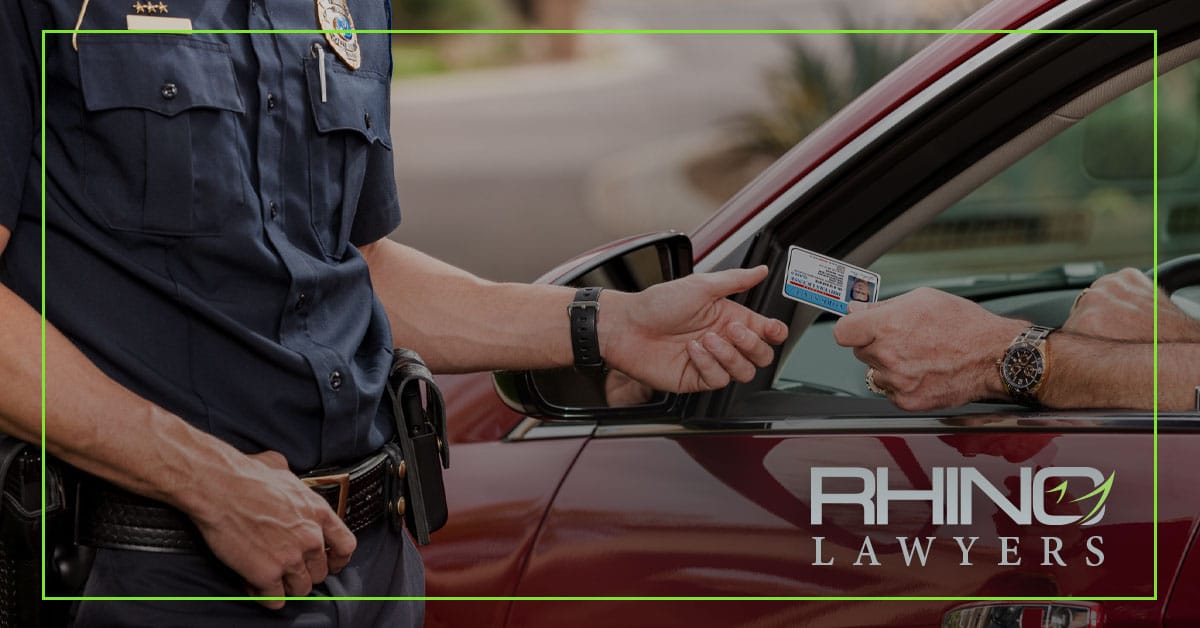
HOW LONG DO POINTS LAST ON YOUR LICENSE
Have you ever wondered how long the points stay on your license? To start with, you accumulate points on your license due to traffic violations. Unfortunately, these points will always remain on your record.
However, the points only count against you for three years. Incidentally, these will continue to collect on your license so the state can track and enforce penalties. Because you could have your license suspended if you accumulate too many points.
Points From Traffic Violations
Considering, you receive points on your license from traffic violations. It is important to know and understand the common traffic violations. It will help you to avoid getting points on your license. Florida’s common traffic violations include:
| VIOLATION | POINTS |
| Moving violations (non-speeding, no accident) | 3 Points |
| Speeding up to 15 mph over the posted speed | 3 Points |
| Littering | 3 Points |
| Violation of child restraint laws | 3 Points |
| Driving with an open container in your vehicle | 3 Points |
| Speeding more than 15 mph over the posted speed | 4 Points |
| Passing a stopped school bus | 4 Points |
| Moving violation (non-speeding) resulting in a crash | 4 Points |
| Reckless driving (criminal traffic violation) | 4 Points |
| Illegally passing a stopped school bus | 4 Points |
| Unlawful speed resulting in a crash | 6 Points |
| Leaving scene of crash with damage greater than $50 | 6 Points |
Long-Term Consequences From Points
Receiving points on your license result in long-term consequences. In fact, your insurance rates will increase for at least three years after a citation. Not to mention, too many points over time will result in a suspension of your driving privileges.
| POINTS | SUSPENSION |
| 12 points within 12 months | 30-day suspension |
| 18 points within 18 months | Three-month suspension |
| 24 points within 36 months | One-year suspension |
In addition, the state will revoke your license if you receive 3 major offenses or 15 minor violations in a 5-year period. Unfortunately, this many points on your license also earns you the title “habitual traffic offender (HTO).”
Removing Points from license
Luckily, you have options, so you do not accumulate points on your license. First, with some moving violations, you can go to traffic school to avoid points on your license. Actually, attending traffic school will not only keep points off your license, it will keep your insurance rate from going up.
Secondly, you can fight the ticket to keep points off your license. With this option, you would need to win your case in court to keep the points off. However, if the court finds you guilty, you will accrue the points on your license, pay any fines, and court fees. So, if you plan to fight your ticket, you should hire an attorney to represent you.
CONTACT TAMPA TRAFFIC TICKET ATTORNEY
RHINO Lawyers can help and guide you through a system molded by law enforcement, judges, and lawyers for decades. Having won cases for our clients in similar circumstances, our criminal defense team knows what it takes to fight on your behalf.
Let RHINO Lawyers answer your questions and review the facts of your case with a Free Consultation. Get started by completing the “Free Instant Case Evaluation” or by calling us any time, day or night, at 844.329.3491.
Leer más
MY TEEN GOT A TICKET
Your teen driver just received their first traffic ticket. What should they expect? Consequently, teenagers have the same three options every driver has when they receive a traffic ticket.
The best option for teenage drivers as well as everyone on the else is to avoid traffic violations. However, even the most careful driver makes a mistake occasionally. Therefore, knowing their options is important.
Ticket Options
Typically, you or your teen have the following three options available for handling a traffic ticket. Yet, it will depend on your situation when selecting the best option.
- Pay the ticket – This is the worst option for moving violations. Remember paying the ticket may also result in points on their driver’s license and an increase in insurance costs for the next three years. Incidentally, it is the opposite for non-moving violations.
- Pay the ticket and elect traffic school – This means you or your teen will pay the ticket and pay the cost of traffic school. This could help your teen keep points off their license. While traffic school is available online, they still need to spend the four-hour equivalent of being in a classroom.
- Fight the ticket – This means that your teen will not have to pay the ticket until the end of their trial. Yet, if the ticket gets dismissed, they will not have to the fine and can keep their driving record clean.
Please keep in mind. The law does not allow a minor to hire an attorney, so as the parent or guardian you will need to hire the attorney for them.
Other LAWS for Teen Drivers
In addition, to the normal traffic laws, minors have other laws to follow to protect their right to drive. These laws also have penalties for teenage drivers that violate them.
- No Moving Violation Convictions – Minor’s that receive a moving violation while they have their learner’s permit will extend the time of the learner’s permit for a year from the conviction or till the age of 18.
- School Attendance – Not attending school could suspend their driving privilege or keep them from getting their license until they can provide proof, they have attended school for a minimum of 30 days in a row.
- Using Alcohol – Florida has a zero-tolerance policy. Drivers under 21 caught with a .02% or more will receive an automatic 6-month suspension of their license. If they get caught twice, they lose it for one year.
- 6+ points in 12 months – Your teen will have their license restricted to “business only” driving for a 12-month period or until the age of 18.
- Tobacco Possession Conviction – Minor’s convicted of tobacco possession will have their license revoked for a minimum of 30 days.
CONTACT TAMPA TRAFFIC TICKET ATTORNEY
RHINO Lawyers can help and guide you through a system that has been molded by law enforcement, judges, and lawyers for decades. Having won cases for our clients in similar circumstances, our criminal defense team knows what it takes to fight on your behalf.
Let RHINO Lawyers answer your questions and review the facts of your case with a Free Consultation. Get started by completing the “Free Instant Case Evaluation” or by calling us any time, day or night, at 844.329.3491.
Leer más
MOST COMMON TRAFFIC VIOLATIONS
For many people, driving is a part of everyday life. So, avoiding a traffic violation is essential for staying behind the wheel. However, most people are guilty of certain traffic violations at some point.
Even the most skilled driver can receive the painful reminder of a traffic ticket. Unfortunately, the reminder doesn’t end with a ticket. You could receive a fine and higher insurance rates as well.
Of course, knowledge of the rules of the road will help you avoid these traffic violations. Here are six of the most common traffic violations to avoid.
Speeding Tickets
It should come as no surprise speeding is the most common moving violation. With this in mind, pay attention to speed limits when driving. Especially in school zones, residential neighborhoods, and construction zones. Being conscious of your speed will help prevent accidents and reckless driving caused by driving too quickly.
Running Red Light
Trying to beat a yellow light could cause you to run a red light. Red light tickets are expensive and could cause your insurance rates to increase. Be mindful when approaching a light at an intersection and stop if the light is changing.
Following Too Closely
To begin with, you should always keep a safe distance between you and other vehicles. Especially, when you are driving in the rain or on wet roads as you will need more time to stop. You can receive a ticket for following another car too closely or tailgating.
Drunk Driving (DUI)
First of all, drinking and driving is very dangerous. When you drive drunk you not only put your life at risk, but you risk the lives of others. Typically, driving under the influence leads to many other traffic violations so it’s best to not drive if you have been drinking.
Wrong-WAY Ticket
Incidentally, most wrong-way drivers are under the influence of alcohol. Wrong-way driving is the number one cause of wrong-way crashes. To avoid wrong-way driving stay alert and watch for one-way street signs. However, if you find yourself traveling the wrong direction stay calm and quickly find a place to turn around.
Unsafe Lane Changing
You can receive a ticket for unsafe lane changes. Not using your turn signals, appropriate hand signals, or not allowing enough space when making a lane change could cause an accident. For this reason, it is important to indicate to other drivers when you want to change lanes. This will help to keep you and everyone else safe.
CONTACTO
RHINO Lawyers can help and guide you through a system that has been molded by law enforcement, judges, and lawyers for decades. Having won cases for our clients in similar circumstances, our criminal defense team knows what it takes to fight on your behalf.
Let the Tampa traffic ticket attorneys at RHINO Lawyers answer your questions and review the facts of your case with a Free Consultation. Get started by completing the “Free Instant Case Evaluation” or by calling us any time, day or night, at 844.329.3491.
Leer más
TRAFFIC TICKET OPTIONS!
You have three options when you receive a traffic ticket. However, there is a fourth traffic ticket option that no one should do. This option can transform a minor traffic ticket into a major problem.
Never ignore your traffic ticket and do nothing. Failing to act when you receive a traffic ticket can cause you to incur additional fees/fines and possible suspension of your driver’s license.
WHAT YOU CAN DO WITH YOUR TRAFFIC TICKET
The following are the three options you have available:
- Simply pay the ticket. Remember paying the ticket may also result in points on your driver’s license and an increase in your insurance costs.
- Pay the ticket and elect traffic school. This means you are paying the ticket and paying the cost of traffic school. Most schools require you to spend at least four hours in their classroom. While traffic school is available online, you still need to spend the four-hour equivalent of being in a classroom.
- Fight your traffic ticket. This means that you do not have to pay your ticket until the end of your trial, and if you get it dismissed, you will not have to pay for anything!
CONTACTO
RHINO Lawyers can help and guide you through a system that has been molded by law enforcement, judges, and lawyers for decades. Having won cases for our clients in similar circumstances, our criminal defense team knows what it takes to fight on your behalf.
Let the Tampa traffic ticket attorneys at RHINO Lawyers answer your questions and review the facts of your case with a Free Consultation. Get started by completing the “Free Instant Case Evaluation” or by calling us any time, day or night, at 844.329.3491.
Leer más
MOVING VIOLATION POINT SYSTEM
Receiving a traffic ticket is a nuisance and inconvenience. In many cases, a traffic ticket will raise your insurance rate and follow you for years. Others could cause you to lose your license or result in jail time.
Even the most common traffic violation can be damaging if you accrue too many points. Which moving violations incur points? Here is a list of common violations and the associated moving violation point system:
3 POINT VIOLATIONS
- CARELESS DRIVING
- SPEEDING
- Fail to stop at STEADY RED signal
- TRAFFIC CONTROL DEVICE Fail to obey traffic control device (sign)
4 POINT VIOLATIONS
- RECKLESS DRIVING
- Violation of 316.183(2), 316.187, or 316.189, Speed in excess of 50 MPH
- SCHOOL BUS – failure to stop for (school election available to have adjudication withheld)
6 POINT VIOLATIONS
- Leaving the scene of an accident
- Speeding resulting in an accident
- A moving violation resulting in bodily harm
Points are assigned based on the type of conviction and remain on the driver record for at least three years from the date of disposition (conviction). If a driver accumulates too many points in a set time frame, their driving privileges will be suspended.
| POINTS | SUSPENSION |
| 12 points within 12 months | 30-day suspension |
| 18 points within 18 months | Three-month suspension |
| 24 points within 36 months | One-year suspension |
While you can remove points from your driving record, tickets in Florida are not dismissed or removed by taking a BDI course (Basic Driver Improvement course). The only way you can keep a traffic ticket off your record is to prove you were not breaking the law or fight your ticket in court and win. If you’re planning to fight your ticket, you should consider hiring an attorney to represent you.
CONTACTO
RHINO Lawyers can help and guide you through a system that has been molded by law enforcement, judges, and lawyers for decades. Having won cases for our clients in similar circumstances, our criminal defense team knows what it takes to fight on your behalf.
Let the Tampa traffic ticket attorneys at RHINO Lawyers answer your questions and review the facts of your case with a Free Consultation. Get started by completing the “Free Instant Case Evaluation” or by calling us any time, day or night, at 844.329.3491.
Leer más
Improper Passing
From time to time, we’ve all passed other vehicles that we share the roadway with. In Tampa, and the rest of Florida, there’s a right way of passing, and three wrong ways of passing. Florida Statute 316.083 addresses each form of improper passing. If a police officer witnesses a driver making an improper passing maneuver, it’s likely the officer will cite the driver. If an officer doesn’t witness the maneuver, the driver can still expect a ticket for the offense after an accident. Here are the three ways that a driver can expect to receive an improper passing ticket:
- Passing on the Right: This usually occurs on a four-lane road when a vehicle is traveling too slowly in the left lane. Both vehicles are in violation of the law under these circumstances.
- Blind Passing: This occurs on curves or hills when passing in the oncoming traffic lane and the passing driver can’t see oncoming traffic at a safe distance.
- Dangerous Passing: This offense involves cutting another vehicle off after making a pass. At one time or another, we’ve all gotten cut off by another driver.
Improper Lane Changes
Lane change violations are contemplated by Florida Statute 316.085. To legally change lanes in Florida, a driver must first learn that the maneuver can be completed with a clear path. That includes lane changes when passing another vehicle. When passing another car complete it before coming within 200 feet of an oncoming vehicle. A violation can also occur when approached or passed by another vehicle. The driver must make a lane change in a safe and careful manner. A police officer will usually write an improper lane change ticket after an accident, but he or she can independently cite a driver if the officer saw the offense.
Penalties
Improper passing and improper lane change violations carry a fine of up to $300 plus court costs and at least three points against your license. Get points waived upon enrollment and satisfactory completion of a defensive driving course. A person can only take such a course once a year.
Contact RHINO Lawyers
There are alternative dispositions to improper passing and improper lane change charges. Don’t ignore them. Our goal is to obtain the best possible disposition of your traffic case. Contesting your ticket is the only way of approaching that. Contact the Tampa traffic ticket attorneys at RHINO Lawyers as soon as possible after being cited, and our criminal defense team let you know what we think we might be able to do for you.
Leer más