
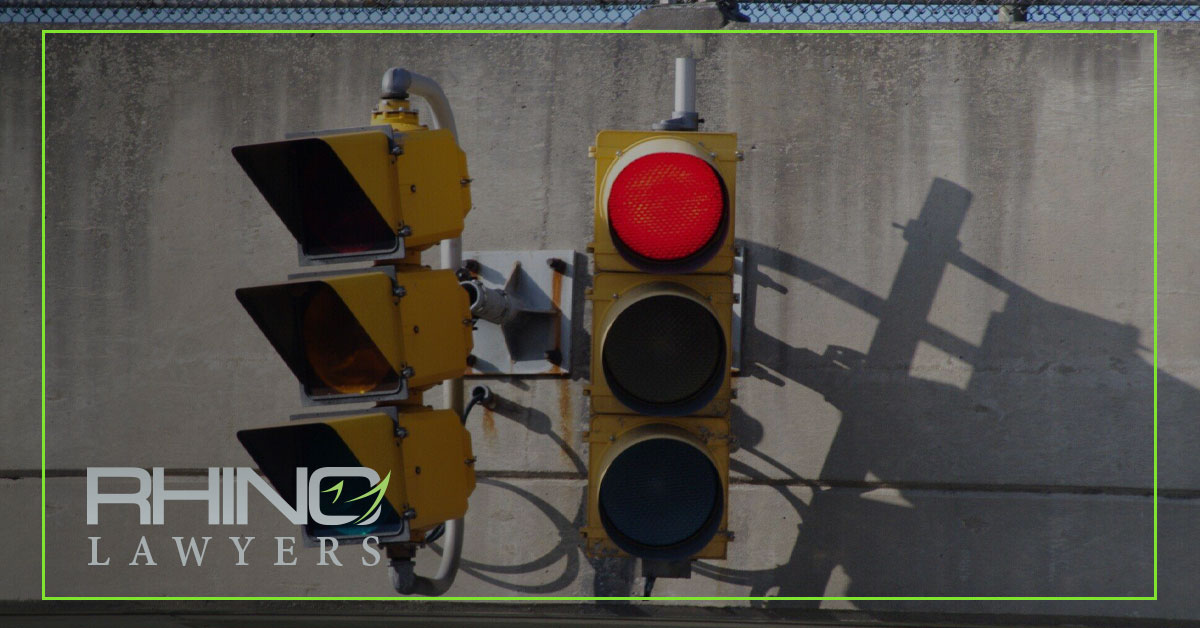
Can You Fight a Red Light Camera Ticket in Florida?
You can get out of a red light camera ticket in Florida if the evidence is unclear, the camera malfunctioned, legal requirements weren’t met, or someone else was driving your vehicle. You can contest the ticket and avoid paying the fine by challenging the evidence and citation details, submitting an affidavit if you weren’t the driver, and consulting a Florida traffic ticket attorney.
According to the IIHS HLDI, in 2023, over 135,000 people were injured in red light running crashes. You running a red light may not have resulted in a crash, injury, or death, but you may have still been caught on camera. And now, you have to deal with a red light camera ticket.
Can you fight this ticket, and if so, is it worth it, and how can you do so?
Can You Get Out of a Red Light Camera Ticket in Florida?
Yes, you can get out of a red light camera ticket in Florida, but it’ll depend on your circumstances.
Generally speaking, vehicle owners have the right to request a hearing and contest the violation before a local hearing officer or traffic court. Your ticket may be dismissed if:
- Evidence is unclear
- Camera malfunctioned
- Legal requirements weren’t met (e.g., proper signage or notice)
Under Florida traffic laws, you can also avoid liability if you can prove your car was stolen or sold before the violation. You can also submit an affidavit identifying the actual driver.
Is It Worth Fighting a Ticket in Florida?
Whether it’s worth fighting a ticket in Florida depends on what your priorities are.
First, consider the fact that the standard penalty is around $158. For some, this is a large sum, while for others, it’s not.
Also, there are no points or license consequences (unless you ignore the first notice; in that case, there are further consequences, such as points and higher fines). So many drivers choose to pay their tickets for the convenience.
However, it can be worth it to contest traffic fines if you believe:
- The citation is inaccurate
- The evidence is weak
- You have a strong legal defense
It can also be worth it to contest the ticket since it may prevent future enforcement errors and avoid setting a precedent for repeat citations at the same location.
How to Get Out of a Red Light Camera Ticket in Florida
Have you gotten a red light camera ticket, and you want to fight it? Then here are the steps you need to take.
Challenge the Evidence and Citation Details
First, you should closely review the citation and the accompanying photo or video evidence. By law, the state has to provide clear evidence that the car entered the intersection after the light turned red.
The ticket may be dismissed if there are the following things, so look for:
- Blurry images
- Unclear license plate
- The video does not conclusively show the violation
- Signage that’s absent or not visible
- Incorrect vehicle information
- Missing timestamps
- Improper notice delivery
Submit an Affidavit if You Weren’t the Driver
Florida allows you to avoid liability if you submit a sworn affidavit stating that you weren’t the driver at the time of the violation. So this is a viable option if your family member, friend, or other authorized driver was operating your vehicle at the time of the violation. You can also explore this route if the car was old, leased, or stolen before the violation.
Typically, you’ll have to submit the affidavit within 60 days of receiving the notice. You may need to submit supporting documentation, too, such as a bill of sale or police report.
Consult a Florida Traffic Ticket Attorney
Consulting a Florida traffic ticket attorney can significantly improve your chances of getting out of the ticket. An experienced and reputable lawyer will understand the specific procedural and evidentiary requirements, and they’ll also know how to spot weaknesses that drivers often miss.
While there may be legal fees, they’re worth it when you can save time, reduce stress, and make sure there aren’t escalating fines or enforcement actions.
Frequently Asked Questions (FAQs)
Does a Red Light Camera Ticket Go on Your Record in Florida?
In Florida, a red light camera ticket doesn’t go on your driving record, while traditional traffic citations do. This is because red light camera violations are classified as noncriminal traffic infractions, which means that they’re treated as civil penalties.
Because of this, no points are added to your license. In addition, the violation isn’t reported to the Florida Department of Safety and Motor Vehicles (FLHSMV) as a moving violation.
Do note that if you don’t pay or contest the ticket, it can escalate into higher fines, collection actions, and points to your driver’s license. However, it won’t directly impact your license status.
What Is the Best Defense for a Red Light Ticket?
The best defense for a red light ticket depends on your individual case, but there are several strategies that are commonly effective. They include:
- Challenging whether the vehicle fully entered the intersection after the light turned red
- Yellow light timing
- Errors in the citation
If someone else was driving your car at the time of the ticket issuance, then you (as the registered owner) can submit an affidavit.
Did Florida Remove Red Light Cameras?
While Florida hasn’t removed red light cameras statewide, they’ve changed their use over time. Under the Mark Wandall Traffic Safety Act, local governments can operate red light camera enforcement programs.
However, many cities and counties in the state have discontinued their programs due to:
- Public opposition
- Administrative costs
- Legal concerns
As a result, there won’t be red light cameras in every city. This means that enforcement will vary widely depending on where you’re driving.
Get Out of Your Red Light Camera Ticket
As you can see, you can get out of a red light camera ticket if you want to. It’s not tough to do either, as long as you have proof of errors or equipment malfunction.
Still, it’s good to have a reputable lawyer on your side. This can reduce your stress and ensure that your case goes as smoothly as possible.
Schedule an appointment with us now if you’d like help fighting your red light camera ticket. RHINO Lawyers offers free case reviews and free video consultations so you can consult a traffic ticket attorney without pressure.
CONTACT TAMPA TRAFFIC TICKET ATTORNEY
RHINO Lawyers can help and guide you through a system molded by law enforcement, judges, and lawyers for decades. Having won cases for our clients in similar circumstances, our criminal defense team knows what it takes to fight on your behalf.
Let RHINO Lawyers answer your questions and review the facts of your case with a Free Consultation. So, get started by completing the “Free Instant Case Evaluation” or by calling us any time, day or night, at (844) RHINO-77.
Leer más
Can a Florida Traffic Ticket Be Dismissed for Officer Error?
A Florida traffic ticket can sometimes be dismissed due to officer error, but only when the mistake is legally significant. Errors such as incorrect vehicle details, citing the wrong statute, or failing to follow required procedures may weaken the case. Minor clerical mistakes alone usually are not enough, but material errors can open the door to dismissal when properly challenged.
Have you ever wondered can a Florida traffic ticket be dismissed? Let’s look into how officer errors occur, which mistakes matter under Florida law, and what options may exist when a citation isn’t as solid as it appears.
Is It Worth Fighting a Ticket in Florida?
Fighting a traffic ticket in Florida often makes sense when the citation carries lasting costs. Many drivers don’t realize that paying a ticket can affect insurance rates, driving records, and future penalties long after the fine is gone. There are three common reasons drivers choose to contest a citation:
- Financial impact beyond the fine
- License points and record concerns
- Opportunity for Florida ticket dismissal
Financial Impact Beyond the Fine
A traffic ticket rarely ends with the amount printed on the citation. Insurance premiums may rise, and that increase can last for years.
Court costs and traffic school fees may follow. A strong traffic violation defense can limit or prevent those long-term expenses.
License Points and Record Concerns
Points added to a Florida license can lead to suspension risks and reduced driving privileges. Employers and insurers often review driving records. Ticket legal advice helps drivers decide whether protecting their record is worth the effort.
Opportunity for Florida Ticket Dismissal
Some citations contain errors or weaknesses that justify a challenge. Officer mistakes, missing details, or procedural issues may support Florida ticket dismissal when raised properly through the court process.
What Percent of Traffic Tickets Are Dismissed?
Many drivers want a clear percentage when they ask about dismissal rates, yet the answer isn’t simple. Florida does not publish a single statewide figure that shows how often citations get thrown out.
Courts handle cases at the local level, and outcomes depend on the details of each stop, the charge, and how the case is presented. Florida ticket dismissal happens more often in some courts than others, which makes broad averages unreliable.
Dismissal rates tend to rise when a citation has clear weaknesses. Traffic law mistakes such as:
- incorrect dates
- missing information
- or unclear allegations
can affect how a judge views the case.
Ticket errors explained in court may weaken the state’s position, though not every mistake carries the same weight. Some errors change nothing, while others raise doubts about accuracy or procedure.
Another factor involves how drivers respond to a citation. Contested tickets receive closer review than those that are simply paid.
Judges and hearing officers examine evidence, testimony, and documentation. When problems appear during that process, Florida ticket dismissal becomes more likely, though no outcome can ever be promised.
Can a Florida Traffic Ticket Be Dismissed?
Courts look closely at how the citation was written and how the stop followed the required rules. Several factors shape whether dismissal is possible:
- Nature of the officer error
- Impact on legal validity
- Court review standards
Nature of the Officer Error
Not every mistake leads to dismissal. Misspellings or small clerical issues often carry little weight.
Traffic law mistakes tied to facts, procedures, or cited statutes raise more serious concerns. Errors involving the wrong driver, vehicle, or location can weaken the citation.
Impact on Legal Validity
Courts focus on whether an error affects fairness or accuracy. Ticket errors explained during a hearing may show that the citation fails to prove the violation.
When an error changes the meaning of the charge, dismissal becomes more likely. Minor flaws that cause no confusion rarely meet that standard.
Court Review Standards
Judges review citations for legal sufficiency. A traffic violation defense must show that the mistake matters under Florida law.
Can a Florida traffic ticket be dismissed? Yes, though only when the error undermines the state’s case in a meaningful way.
Types of Officer Errors That May Impact a Ticket
Mistakes involving the driver, vehicle, or location can matter more than many people expect. A wrong license plate number, vehicle description, or date may cast doubt on whether the citation matches the alleged event. Traffic law mistakes of this kind may support a traffic violation defense when they create uncertainty.
Officers must list the correct statute and violation. Citing the wrong law or mislabeling the offense can change how a judge views the case. Ticket errors explained during a hearing often focus on whether the charge matches the facts described.
Officers must follow set steps when issuing citations. Missing signatures, incomplete forms, or timing issues may weaken enforcement. Florida ticket dismissal becomes more likely when procedural errors affect fairness or accuracy.
Frequently Asked Questions
What Happens If an Officer Does Not Show Up to Court in Florida?
When an officer fails to appear, the judge may dismiss the case, though that result is not automatic. Courts often look at the reason for the absence and whether the officer had notice. A Florida ticket dismissal becomes more likely when no valid explanation exists.
Can Errors on a Ticket Be Corrected Before Court?
Some mistakes can be fixed before or during a hearing. Clerical issues like spelling errors often receive corrections without much debate. Ticket errors explained as substantive, such as a wrong statute, face stricter review and may affect the case outcome.
Does Video or Dashcam Footage Affect Officer Error Claims?
Video evidence can support or weaken claims of traffic law mistakes. Footage may show whether observations match what the ticket states. A traffic violation defense often relies on video to question the accuracy or consistency in the officer’s report.
Traffic Attorneys
Can a Florida traffic ticket be dismissed? Officer errors can affect traffic cases, though results depend on the type of mistake and how it impacts the proof.
En RHINO Lawyers, our firm is built on standing up for people facing traffic violations and criminal charges. We handle everything from speeding and reckless driving to more serious misdemeanor and felony offenses, while pushing back against prosecutors and law enforcement when charges are unfair or unsupported. We know their strategies, challenge weak evidence, and fight to hold the system accountable.
Get in touch today to find out how we can help with your case!
CONTACT TAMPA TRAFFIC TICKET ATTORNEY
RHINO Lawyers can help and guide you through a system molded by law enforcement, judges, and lawyers for decades. Having won cases for our clients in similar circumstances, our criminal defense team knows what it takes to fight on your behalf.
Let RHINO Lawyers answer your questions and review the facts of your case with a Free Consultation. So, get started by completing the “Free Instant Case Evaluation” or by calling us any time, day or night, at (844) RHINO-77.
Leer más
Can You Refuse a Field Sobriety Test in Florida?
For those wondering, “Can you refuse a field sobriety test in Florida?”, the answer is yes, you can. Standardized field sobriety tests (FSTs) aren’t mandatory, and saying no to them is one of the traffic stop rights of motorists.
You should also remember that field sobriety test refusal isn’t an admission of guilt. However, you must recognize that under Florida DUI laws, law enforcement officers can still arrest you if they have other probable causes that you’re operating a motor vehicle under the influence.
Florida’s strictness regarding DUI cases is understandable, given that they can be deadly. According to Florida Highway Safety and Motor Vehicles (FHSMV), one in three fatal crashes in the state results from an impaired driver. Still, this doesn’t mean that the police no longer have to follow due process if they suspect you’re driving impaired.
Why Can You Refuse a Field Sobriety Test in Florida?
You can refuse a field sobriety test in Florida because they’re voluntary. They’re also subjective, with many factors potentially influencing them, making them inaccurate and causing them to result in “false positives.”
Some examples of factors that can make FSTs inaccurate are:
- The testing environment
- The testee’s age, medical condition, and physical and mental state
- The officer’s experience and manner of test administration
Note that many Americans have faced arrests after “failing” field sobriety tests despite being sober. According to a WSMV4 report, for instance, over 600 drivers in Tennessee got arrested for driving under the influence even though they were completely sober at the time law enforcers detained them.
What Happens When You Decline a Field Sobriety Test?
On its own, the refusal of field sobriety tests doesn’t result in legal consequences in Florida. Because FSTs are voluntary, the police can’t require or force you to undergo them, either. Law enforcement officers cannot just automatically arrest you or suspend your license for refusing FSTs.
The police, however, can arrest and require you to undergo a breathalyzer test, provided they have probable cause that you’re driving impaired.
What Does Reasonable Suspicion and Probable Cause Mean in DUI Cases?
In Florida, the police must first have reasonable suspicion before they can even initiate a traffic stop. It’s a lower standard than probable cause and requires rational inferences taken from articulable, specific facts.
Having probable cause, on the other hand, is necessary to make an arrest.
Examples of Reasonable Suspicion
An example of a reasonable suspicion that can lead to a police officer stopping and pulling a motorist over is if they were speeding and driving recklessly. The police may have also seen them swerve erratically or run a red light.
The above indications can be enough reasonable suspicion to justify the traffic stop. At this point, the police can request that the driver they stopped undergo field sobriety tests. The motorist can say no, as it’s their right to do so.
Examples of Probable Cause
If a driver displays other symptoms of being under the influence, the police can use their observations as probable cause to make an arrest. Examples are having bloodshot eyes and slurred speech. An unmistakable smell of alcohol or marijuana on the person or open containers of alcohol in the car can also be probable causes.
Following the arrest, the police may then require the arrested driver to undergo a breathalyzer test. Unlike field sobriety tests, the breath test is mandatory.
Florida has recently updated its law regarding the breathalyzer test. As reported by the Florida Law Enforcement Liason Program, beginning October 1, 2025, refusing breath and urine tests has become a criminal offense. A first refusal is a second-degree misdemeanor, while subsequent ones are first-degree misdemeanors.
Should You Refuse a Field Sobriety Test?
It’s up to you, but remember that it’s your right to say no to field sobriety tests. However, you should refuse in a polite manner and state it as clearly as possible. Tell the police officer you’re refusing to undergo FSTs as advised by your legal team (if you have one).
Frequently Asked Questions
Can an Officer Take Your License if You Refuse a Sobriety Test?
If the test you refuse is a field sobriety test, then no, the police cannot automatically take your license away. However, they can suspend your license if you refuse a breathalyzer test.
Failure to submit to a legal breathalyzer test requirement can result in the suspension of your driving privileges for a period of one year on the first refusal, under Florida Statutes 316.1932. Subsequent refusals will result in a license suspension of 18 months.
What Are the Types of Field Sobriety Tests?
There are several types of field sobriety tests conducted on Florida roadsides, with the most common (and often first done) being the Horizontal Gaze Nystagmus (HGN) test. After this, police officers can also conduct the “Walk-and-Turn (WAT)” test and the “One-Leg Stand (OLS)” test.
None of those three tests is 100% accurate. Even the most accurate, the HGN test, still has a high error margin of 23%. As the U.S. Department of Justice Office of Justice Programs explains, HGN’s reliability rate is 77%, 68% for WAT, and 65% for OLS.
Is It Smart to Hire a DUI Lawyer?
Yes, it’s wise to hire a highly experienced DUI lawyer, especially right after the police make an arrest. The sooner you work with one, the sooner your attorney can begin preserving your rights and building your DUI defense strategies.
Your DUI lawyer will gather evidence immediately following the arrest, including your personal account of what happened and witness testimonies. They’ll also review video footage and police reports to identify any potential mistakes (e.g., unlawful arrest or forcing FSTs).
No Police Officer Can Mandate Field Sobriety Tests
Now you know that the answer to the question “Can you refuse a field sobriety test in Florida?” is yes. It’s your right, although police can still arrest you for DUI if they have probable cause.
Before you agree to anything the Florida police say, reach out to the highly experienced DUI lawyers at RHINO Lawyers. We’ll use our in-depth knowledge, skills, and experience to help protect your freedom and future. We’ve done the same for hundreds of other cases we’ve won for clients in similar situations.
Our hotline is available 24/7, so get your free instant case evaluation today.
CONTACT TAMPA TRAFFIC TICKET ATTORNEY
RHINO Lawyers can help and guide you through a system molded by law enforcement, judges, and lawyers for decades. Having won cases for our clients in similar circumstances, our criminal defense team knows what it takes to fight on your behalf.
Let RHINO Lawyers answer your questions and review the facts of your case with a Free Consultation. So, get started by completing the “Free Instant Case Evaluation” or by calling us any time, day or night, at (844) RHINO-77.
Leer más
What to Expect During a Florida DUI Arrest – Step by Step
Being arrested for DUI is always a stressful experience. That said, knowing what to do and say in this situation will be a big help in protecting your rights.
Why is this important? Simple: a DUI stop in Florida is a fairly complex procedure, and there’s plenty of space to make a mistake. The consequences of this mistake can be serious, potentially including license suspension and jail time.
Do you think you might be facing a DUI arrest in Florida? Here’s what you can expect from this process and how to navigate it effectively!
What Happens During a DUI Arrest?
One of the first steps in a DUI arrest involves being stopped for a DUI check. The officer will then use field sobriety and/or chemical testing.
Field Sobriety DUI Tests
Most officers will first ask you to complete a field sobriety test. This is a series of physical and cognitive exercises designed to assess your impairment.
What you may not know is that field sobriety tests are voluntary in Florida. There are no penalties for refusing. However, if you choose to take the test, the results (which may be inaccurate) could lead to a DUI arrest.
The three most common field sobriety tests are:
- One-leg stand test
- Walk-and-turn test
- Horizontal gaze nystagmus test
1. One-leg stand (OLS) test
For a one-leg stand test, the officer will ask you to stand on one foot and count aloud to 30. Your other foot should be raised about six inches off the ground. Being unable to stand for 30 seconds is an indicator that you’re intoxicated.
2. Walk-and-turn (WAT) test
As the name implies, this test involves you walking in a straight line. You’ll need to walk heel-to-toe for a set number of steps, turn around, and walk back. The officer will evaluate your coordination and the ability to follow instructions.
3. Horizontal gaze nystagmus (HGN) test
During this test, the officer will move a pen or finger in front of your eyes and ask you to follow it. They’ll look for involuntary jerking movements, which are another common sign of driving under the influence.
Chemical DUI Tests
If you fail or refuse a field sobriety test, the officer will likely ask you to submit to chemical testing. The goal is to measure your blood alcohol content (BAC).
In Florida, you can refuse chemical testing as well. However, doing so carries major consequences, regardless of whether you’re convicted of DUI or not. The two most common chemical tests are the breath and blood tests.
1. Breath Test
During this test, the officer will use a machine known as a breathalyzer to measure your blood alcohol content. In Florida, any result over 0.08% means you’re driving under the influence. That said, some readings may be inaccurate.
2. Blood Test
In some cases, the officer may ask you to submit to a blood test. This involves having your blood drawn by a qualified professional. In DUI cases involving serious injuries or death, the blood test may be mandatory.
What Are My Rights at a DUI Stop?
It’s very important to know your DUI legal rights in Florida, as everything you do or say can impact the outcome of the arrest. Your key rights include:
Right to Remain Silent
If you’re stopped under suspicion of DUI, you have the right to remain silent. You don’t have to answer any questions about your alcohol consumption or prior activities. The only thing you need to do is provide documentation:
- Your name
- Driver’s license
- Vehicle registration
- Proof of insurance
Right to Request an Attorney
If you’re arrested, you can always ask for a DUI lawyer in Florida. Handling DUI charges on your own is usually not a good idea. Your attorney can guide you through the legal process and will help protect your rights and interests.
Right to Implied Consent Notice
During a DUI arrest, you have the right to be informed of the implied consent law. This law states that a driver arrested for DUI must consent to a blood or breath test. The consent notice is what gives the officer a legal basis to request the test.
Right to Refuse Field Sobriety Tests
As mentioned, field sobriety tests are voluntary. In some cases, it’s possible to fail these tests even if you’re fully sober. Even so, the law can use the results of these tests to establish probable cause for your DUI arrest.
Frequently Asked Questions (FAQ)
What Should You Not Do at a DUI Stop?
The Florida arrest process can be tricky to navigate. One thing you should never do, however, is resist the potential arrest. Listen to the officer, consent to the blood and breath tests, and remain non-confrontational.
What Are the Consequences of a DUI In Florida?
Florida DUI penalties largely depend on whether you’re a repeat offender or not. If this is your first DUI arrest, you can expect the following penalties:
- A $500 to $2,000 fine
- Up to nine months in jail
- A license suspension (for 6-12 months)
- 50 hours of community service
Repeat offenders face larger fines and more jail time. They may also get additional penalties, such as having to use an interlock ignition device. A fourth or greater offense will lead to a third-degree felony charge and up to five years in jail.
How to Avoid Incriminating Yourself at a DUI Stop?
Beyond cooperating with the officer, avoid saying too much at a DUI stop. The less you say, the easier it is to avoid incriminating yourself. For instance, never say that you were drinking earlier in the day or that you’re coming from a party.
DUI Arrest in Florida? We Can Help!
If you follow this guide, your DUI arrest should be reasonably uneventful. At this point, your next step should be to hire a DUI lawyer to represent you.
En RHINO Lawyers, we’ve handled a variety of Florida DUI cases. Defending a DUI is complex, with many potential pre-trial defenses and approaches. When we learn about the facts of your case, we’ll know how to protect your driving privileges.
Our injury and traffic attorneys have recovered almost $100,000,000 for our clients. Find out if we can do the same for you via this free case evaluation!
CONTACT TAMPA TRAFFIC TICKET ATTORNEY
RHINO Lawyers can help and guide you through a system molded by law enforcement, judges, and lawyers for decades. Having won cases for our clients in similar circumstances, our criminal defense team knows what it takes to fight on your behalf.
Let RHINO Lawyers answer your questions and review the facts of your case with a Free Consultation. So, get started by completing the “Free Instant Case Evaluation” or by calling us any time, day or night, at (844) RHINO-77.
Leer más
The Hidden Costs of Traffic Tickets: Insurance, Fees, and Points Explained
From higher auto insurance premiums to hundreds of dollars in traffic violation fees and fines and driving points on license records, these are the hidden costs of traffic tickets in Florida. Failure to satisfy citations can lead to even more expenses, as you could end up paying late fees and having your license suspended.
Understanding how driving citations and traffic fines impact you as a motorist is crucial, even if Florida has among the lowest rates of speeding tickets in the country. According to FloridaPolitics.com, a MarketWatch study found that every year, only about 6.92% of Floridian drivers get a speeding ticket, the fourth-lowest in the U.S.
Familiarizing yourself with traffic tickets and their “hidden costs” can point you in the right direction and help you know what steps to take, how to save money, and do what you can to preserve your driving privileges.
At What Speed Do You Get a Ticket?
Just one mile over the posted speed limit is enough to get you a speeding ticket. In some cases, however, police officers may give warnings for these minor infractions. They’re more likely to let you off with a verbal warning if:
- The offense is minor (e.g., a tiny speed difference of 1 to 5 mph over the posted limit)
- You have a clean driving record (e.g., no history of traffic violations)
- You’re polite and cooperative
On the other hand, you can expect the police to give you a ticket if the violation involves faster speeds. A speed of 50 mph or higher over the posted limit could even lead to a charge of criminal misdemeanor.
According to FLSenate.gov, under Florida Statutes 316.1922, such behavior constitutes “dangerous excessive speeding.” A first offense can lead to a $500 fine, 30-day jail time, or both. On the other hand, subsequent convictions carry a $1,000 fine, a 90-day imprisonment term, or both.
Multiple offenses within five years can also lead to the revocation of driving privileges for at least 180 days up to a year.
Can I Just Pay My Ticket and Not Go to Court in Florida?
It depends on the offense committed; if it’s minor, there’s usually no need to make a court appearance, provided you’ve made your fee payment on time.
In some cases, the state may allow you to opt to undergo a driver improvement course. According to the Florida Highway Safety and Motor Vehicles (FLHSMV), customers with a traffic citation may be eligible to have applicable points withheld and get an 18% reduction in citation fees if they go with this route.
On the other hand, more serious offenses typically require a court appearance. Examples include:
- Excessive speeding
- Passing a stopped school bus
- Getting charged with no proof of insurance
- Leaving a child unattended in a vehicle with the engine running
The court appearance mandated in the above offenses is typically non-negotiable.
What Are the Hidden Costs of Traffic Tickets in Florida?
Traffic tickets can result in significant increases in auto insurance premiums, with the greatest spikes associated with severe violations like dangerous, excessive speeding. Note, however, that even minor infractions can still lead to premium spikes.
According to Experian, the average monthly premium of a driver who has failed to show documents like proof of insurance is $214, while a motorist with no violations only pays $184.
In addition to the traffic ticket insurance increase, violations also come with the “hidden” cost of driving points. The worse the violation, the more points it adds to your record.
The authorities can and will suspend your license if you get too many driving points. The length of suspension depends on the number of points accumulated within the following timeframes:
- 12 points within 12 months: 30-day suspension
- 18 points within 18 months: 3-month suspension
- 24 points within 36 months: 1-year suspension
There are also the chargeable fees for the tickets themselves. Most speeding tickets, for instance, come with a $200 to $300 fine. In some cases, they may even reach $1,000.
Don’t forget about the traffic fines and consequences of leaving them unpaid. They can lead to license suspension and even more penalties. They can also result in increased insurance rates and even bench warrants.
Frequently Asked Questions
Is It Worth Going to Court for a Traffic Ticket?
Yes.
In many cases, it’s worth going to court for a traffic ticket because simply paying the fines is an admission of guilt. When you don’t fight the ticket, you’ll see an increase in your insurance premiums and accumulate points. Depending on your current number of points, incurring more may get your license suspended.
When Does Beating Traffic Tickets Make Sense?
It makes sense to fight traffic tickets if their potential consequences (e.g., license suspension, jail time, and steep fines) are severe enough that they warrant the effort. Another situation is if you have a solid, valid defense, such as if there was something that obscured your view while driving, or if you believe and can prove that the officer made a mistake.
While you aren’t legally required to have a legal professional fight your traffic ticket on your behalf, the assistance of a highly experienced traffic defense lawyer can prove invaluable. Your legal counsel will poke holes in the state’s case, whether it has to do with the officer’s mistakes or there were issues with the radar or laser calibration.
Your traffic defense lawyer may also negotiate a reduced charge, which can help you avoid a criminal conviction. Such assistance can make or break your future if you hold a commercial driver’s license (CDL) and need your record to be clean to keep your job.
Don’t Delay Dealing With Traffic Tickets
With the hidden costs of traffic tickets ranging from higher auto insurance premiums to hefty fines and additional driving points, it makes sense to always consider fighting them.
You don’t have to be alone in the fight, either. With the help of RHINO Lawyers, you can get the exceptional legal advice and representation you need to protect your rights and driving privileges. Our attorneys have many years of extensive experience in traffic laws and defending those accused of breaching them.
Our hotline is available 24/7, so contact us today for your free case evaluation.
CONTACT TAMPA TRAFFIC TICKET ATTORNEY
RHINO Lawyers can help and guide you through a system molded by law enforcement, judges, and lawyers for decades. Having won cases for our clients in similar circumstances, our criminal defense team knows what it takes to fight on your behalf.
Let RHINO Lawyers answer your questions and review the facts of your case with a Free Consultation. So, get started by completing the “Free Instant Case Evaluation” or by calling us any time, day or night, at (844) RHINO-77.
Leer más
Respiratory Fraud in Healthcare: How to Spot It
Respiratory care is a vital part of modern medicine. From oxygen therapy and nebulizers to CPAP machines and ventilators, respiratory services and equipment help millions of patients breathe easier. Unfortunately, that same complexity also creates opportunities for fraud.
Respiratory fraud in healthcare isn’t just about wasted money. It can mean patients receive unnecessary treatments, wrong equipment, or no real care at all. At the same time, insurers, Medicare, or Medicaid are billed for services that weren’t truly needed or never happened.
Identifying healthcare fraud and reporting it can help patients, families, and honest providers protect both health and resources.
What Is Respiratory Fraud?
Respiratory fraud occurs when providers, companies, or individuals intentionally misuse respiratory billing or services to get money they aren’t entitled to. This can involve:
- Falsely claiming patients need expensive respiratory equipment
- Billing insurance for services that were never provided
- Upcoding (billing for a more complex or costly service than was actually given)
- Providing unnecessary treatments just to generate revenue
These schemes often target vulnerable groups: seniors, people with chronic lung conditions, and patients who may not understand all the technical details of their care.
Signs of Healthcare Fraud
There are many kinds of respiratory fraud to be aware of. Here are some:
1. Unnecessary Respiratory Equipment
One of the most common schemes involves durable medical equipment (DME) like:
- CPAP/BiPAP machines
- Oxygen concentrators and tanks
- Nebulizers and inhalation therapy devices
- Ventilators and accessories
Fraudsters may:
- Convince patients they “must” have a device they don’t truly need
- Use aggressive telemarketing to sign people up for equipment
- Submit fake or exaggerated diagnoses for coverage approval
- Send equipment to patients who never asked for it, then bill insurance
Patients might not realize they’ve been enrolled until they see unusual charges or receive equipment they didn’t request.
2. Upcoding And Inflated Billing
Upcoding means billing for a more expensive service than what was actually provided.
In respiratory care, that can look like:
- Billing for a more complex respiratory therapy session than what occurred
- Claiming a patient used oxygen therapy continuously when they used it occasionally
- Coding simple CPAP supplies as more advanced or specialized items
These small changes add up to big overpayments over time.
3. Phantom Services
“Phantom services” are services that never happened, but are billed as if they did.
Examples in respiratory care include:
- Billing for home visits or respiratory therapy sessions that never took place
- Charging for refills of oxygen or respiratory medications that were never delivered
- Claiming patient monitoring or follow-ups that were never done
Patients and caregivers may not notice if they aren’t regularly checking their explanation of benefits (EOB) statements.
4. Misrepresenting Medical Necessity
Most payers require medical necessity for respiratory services and equipment. Fraud occurs when:
- Providers document false symptoms (like claiming severe COPD or sleep apnea when tests don’t support it)
- Test results are altered or exaggerated to justify the equipment
- Diagnoses are “upgraded” to conditions that qualify for higher reimbursement
In some schemes, patients are pushed through quick, low-quality screenings to create a paper trail, then signed up for long-term equipment rentals.
5. Kickbacks And Improper Referrals
Sometimes, fraud revolves around financial relationships between physicians, respiratory suppliers, and other entities.
Examples include:
- A provider receiving payments, gifts, or incentives for referring patients to a specific respiratory equipment supplier
- Companies are paying marketers to steer patients into unnecessary respiratory services
- Arrangements disguised as “consulting fees” or “marketing agreements” that are really kickbacks
These practices can violate anti-kickback and self-referral laws and lead to biased recommendations that aren’t in the patient’s best interest.
What To Do If You Suspect Respiratory Fraud
If something doesn’t feel right, there are steps you can take to prevent medical fraud:
- Talk to your doctor or care team: Ask them to explain your diagnosis, treatment, and any equipment in plain language.
- Check with your insurer: Call the number on your insurance card to review recent claims and ask about anything that seems suspicious.
- Keep detailed records: Save statements, bills, letters, and notes from phone calls; write down dates, names, and what was said.
- Report your concerns: Many insurers, Medicare, and Medicaid have fraud hotlines.
You can report anonymously, so that should not be an issue. Also, hiring a respiratory fraud attorney is a great step to take.
Frequently Asked Questions
How Can I Tell If I’m Being Given Unnecessary Respiratory Equipment?
Be cautious if you receive unrequested devices, feel pressured to sign forms, or are told, “Don’t worry, it’s free; insurance covers everything,” without a clear medical explanation.
Ask your doctor to walk you through your diagnosis, test results, and why the equipment is needed. If you’re still unsure, consider getting a second opinion.
What Should I Look For On My Insurance Or Medicare Statements?
Review your Explanation of Benefits or Medicare Summary Notices for:
- Respiratory therapy visits you don’t remember
- Charges for oxygen, nebulizers, or other devices you never used
- Ongoing monthly rental fees for equipment you returned or no longer have
If you see anything unfamiliar, call your insurer and ask them to explain each charge.
What Should I Do If I Suspect Respiratory Fraud?
Start by:
- Understanding medical fraud risks by consulting a respiratory fraud lawyer.
- Contact your doctor or clinic to ask about questionable charges or equipment.
- Call your insurance company or Medicare to report suspicious claims.
- Keeping written records of bills, statements, and conversations.
If you believe there is serious or large-scale fraud, you can also reach out to government fraud hotlines or consult with a healthcare fraud or whistleblower attorney to understand your options and protections.
Use Our Healthcare Fraud Detection Tips
Respiratory care can be life-changing when it’s done right and deeply harmful when it’s abused for profit. By staying informed, asking questions, and carefully reviewing billing and equipment, patients and families can play a powerful role in spotting respiratory fraud and protecting both their health and the healthcare system itself.
Use our healthcare fraud detection tips and prevent further healthcare fraud by contacting RHINO Lawyers.
We are Tampa’s go-to law firm and are ready to help you understand your case better and make the right decision regarding the respiratory fraud you are experiencing.
Schedule a free video consultation today.
Leer más
How School and Construction Zone Tickets Impact Your Florida License
Speeding in a school zone or speeding in a construction zone doesn’t just lead to higher fines. It can immediately affect your Florida license through added points and potential insurance increases. School-zone and construction-zone violations often carry doubled penalties, meaning just one ticket can significantly raise your risk of suspension.
Have you ever wondered why tickets in these areas seem so much harsher than standard speeding fines? It’s because Florida law treats child-safety areas and active work zones as high-risk environments deserving of stricter enforcement.
So, let’s look into how these specific violations impact your license, your insurance, and your long-term driving record.
Do School Zone Tickets Raise Your Insurance?
School zone speeding fines often lead to higher insurance costs in Florida. These tickets carry increased penalties, so they tend to have a stronger effect on your driving record and your premiums.
Many drivers are surprised by how quickly a single violation can change their insurance rates. There are three main reasons these tickets raise your premiums:
- Higher risk category
- Added license points
- Stronger Florida traffic ticket impact
Higher Risk Category
Insurance companies place school zone violations in a higher risk group. These areas involve children and strict speed limits, so companies view the behavior as unsafe.
This can push a driver into a more expensive rating tier.
Added License Points
A school zone speeding ticket often brings more license points for speeding than a standard ticket. More points make you look like a higher risk and can lead to higher premiums for several years.
Stronger Florida Traffic Ticket Impact
A school zone violation counts more heavily in Florida’s system. The speeding penalty in Florida grows when the violation happens in a protected zone. It makes insurers more likely to increase your rates.
Can I Get Out of a School Zone Speeding Ticket?
Many drivers hope they can get out of a school zone speeding ticket, but the process depends on the details of the stop. These tickets bring severe penalties, and the rules in these areas leave little room for error.
Still, some defenses may help your case or reduce the impact. There are three common ways drivers handle these tickets:
- Challenging unclear signs
- Questioning the speed device accuracy
- Seeking mitigation through traffic school
Challenging Unclear Signs
Some drivers challenge the ticket by pointing out unclear or blocked signs. A missing or hidden sign can raise fair doubts about the posted limit. It can lead to a reduced penalty or sometimes a dismissed ticket.
Questioning Speed Device Accuracy
A ticket based on radar or laser relies on proper calibration and a clear reading. If the device records were incomplete or out of date, you may have room to question the result.
This approach depends on fact-based details from the stop.
Seeking Mitigation Through Traffic School
Many drivers shift their focus to reducing the effect of the ticket instead of fighting it outright. Florida often lets eligible drivers attend traffic school to reduce license points for speeding.
It can help lessen your speeding penalty in Florida and soften the long-term Florida traffic ticket impact.
Understanding Penalties for Speeding in a Construction Zone
Drivers face higher fines and bigger consequences when caught speeding in a construction zone. Many drivers don’t realize how quickly a single mistake can affect their record.
Three main factors can shape these penalties:
- Active or inactive work zones
- Doubled fines
- Effect on your driving record
Active or Inactive Work Zones
Florida sets different expectations for active and inactive zones. An active zone often has workers on site, reduced speed limits, and clear warning signs.
An inactive zone may have signs posted but no workers present. Penalties vary, and an active zone usually carries higher fines.
Doubled Fines
Many construction zone tickets bring double fines. The state uses these higher penalties to encourage safer driving near work crews.
The higher fine amount sends a clear message that these zones require careful attention.
Effect on Your Driving Record
A construction zone violation can add more weight to your record than a regular ticket. The added points raise the risk of license problems and long-term insurance increases.
It makes the speeding penalty in Florida tougher to manage when the violation happens in a work zone.
Frequently Asked Questions
What Happens if I Am Caught Speeding in a Work Zone Without Workers Present?
Florida won’t always apply doubled fines if no workers are present, but the posted signs still control the rules. Officers often check for signs, barriers, or flashing lights.
A driver can still receive a standard ticket, and this can still increase insurance costs.
How Do Camera-Based Speed Enforcement Systems Affect School Zone Tickets in Florida?
Some school zones use automated cameras to track speed during active hours. The system records your plate and sends a notice by mail.
Contesting these tickets often involves checking time stamps, speed readings, or maintenance records from the device. The process can feel different from a traditional stop.
Can a Construction Zone Ticket Impact a Commercial Driver’s License More Harshly?
A commercial driver faces stricter rules under state and federal guidelines. A construction zone violation can lead to employer reports and safety reviews.
These records can make job changes or renewals harder. A CDL holder may feel the consequences for a long time.
Are There Long-Term Consequences Beyond License Points for Speeding Violations?
Some employers and licensing boards look at past driving records during background checks. A protected-zone violation can show up for years.
It can affect applications for jobs that involve travel or company vehicles.
Speeding and Construction Zone Safety
A ticket for speeding in a construction zone or a school zone can shape your record for years.
En RHINO Lawyers, we’re driven by the people we serve. We built our practice to break away from outdated legal models and offer fast, friendly, and flexible support for clients who expect modern communication.
Our team embraces tech, values clear conversations, and works with data-focused strategies shaped by real industry insight. Get in touch today to find out how we can help with your case!
CONTACT TAMPA TRAFFIC TICKET ATTORNEY
RHINO Lawyers can help and guide you through a system molded by law enforcement, judges, and lawyers for decades. Having won cases for our clients in similar circumstances, our criminal defense team knows what it takes to fight on your behalf.
Let RHINO Lawyers answer your questions and review the facts of your case with a Free Consultation. So, get started by completing the “Free Instant Case Evaluation” or by calling us any time, day or night, at (844) RHINO-77.
Leer más
How a DUI Can Affect Your Professional License in Florida?
A DUI charge can shake more than your confidence; it can threaten your career and your ability to provide for yourself or your family. In 2023, Florida authorities recorded 44,185 DUI arrests statewide, showing how much of a problem this is. Behind every number is someone facing court dates, uncertainty, and the fear of losing a hard-earned professional license.
When your Florida license defines your livelihood, the aftermath of a DUI can feel overwhelming. Understanding what happens next is the first step toward protecting your reputation, your income, and your future.
What Happens to Your Professional License After a DUI
In Florida, a DUI is a criminal offense. That means it appears on background checks and can trigger reviews by state licensing boards. For most professions, this is where the real damage begins.
After a conviction, your licensing board is notified. They will review your case and decide if disciplinary action is needed. Possible outcomes include:
- Temporary suspension of your license
- Mandatory substance-use evaluation
- Probation or fines
- Permanent revocation for repeat offenses
These steps are not automatic, but they depend on the type of work you do and whether your role involves public trust or safety. Health care workers, lawyers, and teachers often face the strictest reviews.
DUI Penalties in Florida and Why They Matter
DUI penalties in Florida depend on your blood alcohol level, prior offenses, and whether property damage or injury occurred. Even a first offense can lead to serious legal and personal consequences.
A first conviction may include:
- A fine between $500 and $1,000
- Up to six months in jail
- Mandatory DUI school and community service
- Suspension of your driving license for up to one year
While these penalties affect everyone, licensed professionals face extra consequences. A DUI on your record can signal poor judgment, making it harder to keep or renew your Florida license.
Florida DUI License Suspension and Your Career
When the Department of Highway Safety suspends your driving privileges, your career may also slow down. A Florida DUI license suspension affects anyone who needs reliable transportation for work, client visits, or field assignments.
You can often apply for a hardship license after part of your suspension period ends, but that does not protect you from your licensing board. To keep working legally, you must follow all reporting requirements and complete any court-ordered programs. Failing to do so can lead to longer suspensions or permanent disciplinary action.
How a DUI Affects Your Record
Your DUI impact on your driving record can last a lifetime. In Florida, a DUI conviction stays on your record for seventy-five years. That means even after you pay fines or complete probation, the charge can appear during background checks and license renewals.
If your profession requires public trust, this history can raise questions about your reliability. Some boards allow individuals to show rehabilitation through counseling, treatment, or clean follow-up records, but that process takes time and consistency.
Florida DUI Legal Assistance for Professionals
Professional workers facing DUI charges should never go through the process alone. Florida DUI legal assistance helps protect both your rights in court and your professional standing. An attorney familiar with both criminal and administrative law can help you:
- Review whether the traffic stop followed legal procedure
- Negotiate reduced penalties or alternative sentencing
- Advice on reporting obligations to your licensing board
- Represent you in disciplinary hearings or appeals
Legal support can make the difference between temporary hardship and long-term career loss.
How to Protect Your License and Career
If you are charged with a DUI, take immediate action to protect your license. Delay can make the situation worse.
- Attend all court dates and complete required programs
- Keep documentation of counseling or treatment
- Communicate with your licensing board about updates
- Follow through on any evaluation or education requests
These steps show accountability and responsibility: traits licensing boards consider when deciding whether to restore or maintain your Florida license.
Frequently Asked Questions
Do All Licensed Professionals in Florida Have to Report a DUI Conviction?
Yes. Most Florida licensing boards require self-reporting of any DUI conviction within a specific time frame, usually thirty days. The Florida Department of Business and Professional Regulation lists failure to report as a disciplinary violation. Timely disclosure helps avoid harsher penalties later during license renewal or investigation.
Can a DUI Conviction Cause Me to Lose My Professional License?
It can. A conviction for driving under the influence is a criminal offense that may trigger board review. The outcome depends on your profession, your record, and the circumstances of the case. Some boards may impose probation or monitoring instead of suspension if you complete treatment and maintain compliance.
How Long Does a DUI Stay on My Record in Florida?
A DUI conviction remains on your driving record for seventy-five years, according to the Florida Department of Highway Safety and Motor Vehicles (FLHSMV). It cannot be sealed or expunged, so it continues to appear in background checks even decades after the offense.
What Happens After a DUI Arrest in Florida?
After a DUI arrest, your license is immediately subject to administrative suspension by the FLHSMV. You have ten days to request a hearing to challenge the suspension. The criminal case proceeds separately in court, where penalties may include fines, jail time, or probation.
Can I Get My License Back After a DUI in Florida?
Yes. You can apply for reinstatement after completing mandatory DUI school, paying all fines, and meeting any probation requirements. For a first conviction, the minimum suspension is 180 days. The FLHSMV handles all reinstatement requests once proof of completion is submitted.
Protecting Your Professional & Driving Future When It Matters Most
A DUI charge can disrupt more than your schedule. It can threaten everything you’ve worked for. When your Florida license supports your livelihood, every decision after an arrest matters. Acting quickly, following the right steps, and having skilled representation can make the difference between temporary hardship and lasting damage.
RHINO Lawyers helps professionals protect both their careers and their driving privileges. The firm’s focused experience in Florida DUI defense means your case gets the attention, strategy, and urgency it deserves. DUI cases get complicated quickly, so acting now is in your best interest. Reach out today for guidance that protects your professional and driving future when it matters most.
CONTACT TAMPA TRAFFIC TICKET ATTORNEY
RHINO Lawyers can help and guide you through a system molded by law enforcement, judges, and lawyers for decades. Having won cases for our clients in similar circumstances, our criminal defense team knows what it takes to fight on your behalf.
Let RHINO Lawyers answer your questions and review the facts of your case with a Free Consultation. So, get started by completing the “Free Instant Case Evaluation” or by calling us any time, day or night, at (844) RHINO-77.
Leer más
What Happens If You’re Charged With DUI While Taking Prescription Medication?
If you or a loved one gets charged with DUI for prescription medications in Florida, you could face repercussions as severe as those usually reserved for driving under the influence of alcohol. From fines to license suspension and even jail time, these are some of the things that can happen following a DUI charge.
Understanding the DUI legal process for prescription-related cases is more crucial than ever, considering that more Americans now rely on these medications.
According to a CivicScience study, for instance, the latest data shows that 68% of Americans take at least one prescription daily, up from 2023’s 67%. Over one in four (26%) say they now even take 4+ prescriptions daily.
The team at RHINO Lawyers will share valuable insights into prescription drugs and DUI to help you protect your legal rights.
Can You Get a DUI for Prescription Drugs?
Yes. A Florida prosecutor can charge you with DUI for prescription drugs, even if you must take them for your health and have a valid prescription.
The primary reason that you can get charged with prescription medication-related DUI is that these drugs, even if taken legally, can impair one’s ability to operate a motor vehicle safely and correctly.
As the U.S. Food and Drug Administration says, some medicines can cause side effects that make driving unsafe. Examples include:
- Drowsiness
- Sleepiness
- Dizziness
- Blurred vision
- Impaired or slowed movement
What Medications Disqualify You From Driving?
Drugs that can “disqualify” you from driving and lead to a DUI charge are those that can interfere with the physical, mental, and observational abilities you need to drive safely. The AARP says these prescription and OTC drugs include:
- Anti-anxiety medications like alprazolam, lorazepam, and diazepam
- Pain relievers like oxycodone and hydrocodone
- Some antidepressants like amitriptyline and nortriptyline
- Antihistamines, including hydroxyzine and diphenhydramine
- Anti-seizure medications
What Happens If You Get Charged With DUI for Prescription Medications?
Alcohol or illicit drugs are not the only ways a Floridian can face a DUI charge. The offense can also constitute driving under the influence of prescription drugs under Florida Statute 316.193.
There’s no distinction between illegal drugs and prescribed medications; if it impairs one’s ability to drive safely, it is DUI.
Some of the consequences of a DUI charge related to prescription drugs include:
- Fines, which can range from $500 to $1,000 for a first offense, $1,000 to $2,000 for a second offense, and up to $5,000 for a subsequent offense
- Mandatory community service
- Imprisonment
- Driver’s license suspension (revocation for subsequent offenses)
In many cases, the law may also require completing a DUI education program for individuals convicted of DUI in Florida. They may also have to install a vehicle ignition interlock device.
What Are Your Legal Rights for DUI Related to Prescription Medications?
Anyone arrested for DUI in Florida has the right to remain silent. Another is the right to refuse field sobriety tests.
What is now outside your legal right is refusing a lawful request for a breath or urine test.
As WFTV 9 reports, as of October 2025, it’s now illegal to do so following a DUI arrest, per the new law known as “Trenton’s Law.” Under this law, refusing breathalyzer tests is now a criminal offense.
What Are Possible Prescription-Related DUI Defense Strategies?
If you or a loved one is taking prescription medications and you’re facing a charge for DUI, your first step should be to contact a criminal defense attorney.
Remember: You can face the same harsh consequences enforced on typical alcohol-related DUI cases even if you haven’t had any alcoholic drinks.
Your DUI attorney will carefully review your case and the circumstances surrounding it to determine the best course of action and potential defense strategies. Depending on what happened, they may use the following methods.
Questioning the Validity of the Arrest and Charge
One of the first steps that your DUI lawyer will likely take is to see if they can challenge the stop and investigation that you or your loved one underwent. They’ll review and question the following:
- Whether the initial traffic stop was even valid
- The training and experience of the law enforcement officer in drug recognition
- If the officer administered and interpreted the results of the tests correctly
Using Expert Testimony and Medical Records
Your DUI lawyer will work with medical and health professionals to build a solid defense case. They’ll speak to your doctor, other physicians, and pharmacological experts to learn more about:
- The prescription medications you were on when you got arrested or charged
- The expected effects of the medicines
- How your prescription drugs work in and affect your body
- Your prescription medication history and tolerance
Your lawyer will also likely reach out to toxicology experts. Their goal is to determine if there’s a case for challenging your blood or urine tests.
Frequently Asked Questions
Is It Possible to Win a DUI Related to Prescription Medications?
Yes, you can win a prescription drug-related DUI. At the very least, you can have it brought down to a lesser charge.
Can You Win a DUI Charge Without a Lawyer?
It’s possible, but know that fighting on your own will be challenging.
The primary reason is that you must prove you weren’t driving while impaired and that you have a valid prescription. You must also provide evidence that you took the medicine as prescribed.
Why Should You Hire a DUI Lawyer?
Remember: Your freedom and future are on the line if you’re facing a DUI charge, even if it occurred as a result of a prescription medication and not alcohol or illicit drugs. A highly experienced defense attorney can help protect and fight for your rights.
Given that DUI lawyers have the training, knowledge, skills, and experience in these matters, hiring one is your best option.
Let RHINO Lawyers Fight for Your Rights
From hefty fines to license suspension, and even imprisonment, these are just some of the harsh consequences of DUI for prescription medications in Florida.
You don’t have to face everything on your own and put your life and freedom on the line. Let the experienced DUI lawyers at RHINO Lawyers assist you. We’ve won hundreds of cases for many of our clients who faced similar situations.
Call us today for a free instant case evaluation. With our 24-hour hotline, you can rest assured that someone will listen to you.
CONTACT TAMPA TRAFFIC TICKET ATTORNEY
RHINO Lawyers can help and guide you through a system molded by law enforcement, judges, and lawyers for decades. Having won cases for our clients in similar circumstances, our criminal defense team knows what it takes to fight on your behalf.
Let RHINO Lawyers answer your questions and review the facts of your case with a Free Consultation. So, get started by completing the “Free Instant Case Evaluation” or by calling us any time, day or night, at (844) RHINO-77.
Leer más
Can a Passenger Be Fined for a Traffic Violation in Florida?
Police can fine passengers in Florida for not wearing a seat belt or having an open alcohol container. While more serious actions like resisting an officer may result in misdemeanor charges, these are typically noncriminal offenses that carry fines. Passenger laws have changed over time to make the state safer and cut down on deaths caused by alcohol and not wearing a seat belt.
While the driver is largely the one responsible for following traffic laws in Florida, that doesn’t mean passengers are immune from getting a traffic violation. Back in the 1970s and 80s, the National Highway Traffic Safety Administration realized that over half of car crash deaths involved passengers not wearing a seatbelt.
Over the next decade, state laws started to change, requiring that passengers wear seatbelts at all times. According to the Florida Department of Highway Safety and Motor Vehicles, in 1986, traffic laws in Florida changed accordingly.
Origins of Seat Belt Laws in the United States
Rising fatalities in highway collisions prompted research from the federal government, which confirmed that seat belt use was strongly correlated with crash survival rates
In 1984, New York became the first state to legally mandate seat belt use for passengers in the front seat. Two years later, Florida passed its own seat belt law. Initially, passenger fines would only be issued through secondary enforcement, meaning that a passenger could only get a citation for not wearing a seat belt if another violation had occurred first to justify the traffic stop.
Florida’s Shift to Primary Enforcement
For example, if a highway patrol officer in Florida pulled over a vehicle for speeding and found that the passenger was not wearing a seat belt, they could issue a fine to both the driver for speeding and to the passenger for the seat belt violation. However, if the police pulled over the vehicle purely based on observing an unbelted passenger, that wouldn’t be a legally permissible stop.
But these rules no longer apply.
In 2009, Florida upgraded the violation to one that allows primary enforcement. This change meant that police now have the power to pull you over and issue a citation purely because they observed a seat belt violation. To this day, Florida statute 316.614 remains the law.
According to NHTSA data, after the change, statewide seat belt usage now stands at over 85 percent. While initially there was strong public resistance to these laws based on personal freedom, these days most people see the logic in requiring people to wear life-saving seat belts when driving or traveling by car.
When Passengers Could Legally Drink in Cars
There are also Florida traffic penalties for passengers in possession of an open container of alcohol. These laws apply even if you’re not driving the vehicle.
Early state laws in Florida only targeted drunk driving, allowing the possession of alcohol in vehicles. However, in the 1970s, high crash rates were found to be linked with alcohol, leading to a growing call for stricter laws regarding alcohol and driving over the next couple of decades.
In 1998, the TEA 21 Restoration Act required states to ban having an open container in either the driver’s seat or the passenger seat. This federal law threatened to cut highway funds for states that didn’t change their legal advice for passengers accordingly. As a result, in the following year, Florida adopted an open container statute. Any passenger who has an open container commits a non-moving violation, which is punishable through passenger fines.
In some specific situations, there may be an exemption. For example, in limousines, passengers may legally consume alcohol. But, in most cases, having an open container in a vehicle is a bad move.
Frequently Asked Questions
What Type of Crime Is a Violation in Florida?
Traffic violations in Florida are generally noncriminal offenses. They fall into two main categories:
- Moving violations: These violations involve unsafe driving behavior, such as speeding or running a red light, and result in fines and points on the driver’s license.
- Nonmoving violations: These include administrative or equipment-related issues, such as seat belt or open container infractions; they carry fines but no points.
Only certain serious actions, like reckless driving or driving under the influence (DUI), are classified as criminal traffic offenses, which can lead to arrest or license suspension.
What is Passenger Interference in Florida?
Passengers in Florida can face penalties for interfering with either the driver or law enforcement officers. Under Florida Statute 843.02, it is a misdemeanor to resist, obstruct, or oppose an officer in the lawful execution of their duties without violence. This can include refusing to provide identification during a lawful traffic stop.
Passengers who obstruct the driver’s view or cause unsafe vehicle operation, such as by blocking mirrors or distracting the driver, can also be cited under Florida Statute 316.2004. Depending on the circumstances, these violations may lead to fines or, in more serious cases, criminal charges.
When Do I Need a Lawyer
You may need a lawyer for a serious traffic case because criminal traffic offenses in Florida, such as DUI or reckless driving, can lead to:
- Jail time
- License suspension
- A permanent record
An attorney helps protect your rights, challenge evidence, and negotiate reduced charges or penalties. If you’re facing a serious traffic violation charge, you risk losing your license. Such a decision could have a huge impact on your ability to live and work.
By working with a lawyer, you ensure you’ll get the best outcome for your case.
Need Legal Help After a Traffic Violation?
Understanding Florida’s passenger and traffic laws helps prevent costly fines and legal trouble after a traffic violation. While most violations are minor, serious offenses can carry lasting consequences. Staying informed and compliant protects both drivers and passengers, keeping everyone safer on Florida’s roads.
If you’ve been cited or charged under Florida’s open container or passenger laws, RHINO Lawyers can help. Our legal team has decades of experience guiding clients through traffic-related cases and will fight to protect your record and your rights. Contáctenos hoy and let’s discuss the specifics of your case.
CONTACT TAMPA TRAFFIC TICKET ATTORNEY
RHINO Lawyers can help and guide you through a system molded by law enforcement, judges, and lawyers for decades. Having won cases for our clients in similar circumstances, our criminal defense team knows what it takes to fight on your behalf.
Let RHINO Lawyers answer your questions and review the facts of your case with a Free Consultation. So, get started by completing the “Free Instant Case Evaluation” or by calling us any time, day or night, at (844) RHINO-77.
Leer más